
Whole-House Custom Cabinetry: A Buyer’s Guide to Coordinated Kitchens, Wardrobes, Vanities and Storage Systems
Whole-house custom cabinetry refers to a design-and-manufacturing approach in which the cabinetry for multiple rooms — kitchens, bathrooms, bedrooms, entryways, studies and living areas — is produced as one coordinated system rather than sourced piece by piece. For homeowners, architects and developers, the goal is to achieve consistent material selection, unified finishing and storage that fits the actual dimensions of each space. When executed well, the result is a home where cabinets, wardrobes, vanities and countertops share a visual language and meet a single quality standard. Nantong Jiashi Integrated Home Co., Ltd., a Chinese manufacturer founded in 1998, is one of the suppliers that has built its production model around this whole-house concept. This article explains what whole-house custom cabinetry includes, what buyers should verify before placing an order, and how Jiashi structures its product range and factory processes to deliver it.
The Problem with Piecemeal Cabinetry Procurement
Many interior projects start with a clear aesthetic goal but end up with cabinetry that looks mismatched across rooms. A kitchen might be specified through one supplier, wardrobes through another, and bathroom vanities through a third. Each piece may function well in isolation, but the following problems often appear:
- Finish and color tones differ across suppliers, making the interior feel fragmented.
- Storage needs are designed independently for each room, losing opportunities for shared solutions and optimized space use.
- Dimensions are not coordinated, so awkward gaps appear around appliances, columns and wall recesses.
- Quality levels vary: a kitchen may use premium hardware while wardrobe interiors use lower-grade fittings.
- Communication overhead increases, since the developer or homeowner must manage multiple drawings, lead times and deliveries.
Whole-house custom cabinetry addresses these issues by consolidating product development, engineering and manufacturing into one framework. Rather than asking a buyer to match products from different lines after delivery, the supplier designs a full set around consistent technical parameters. This makes the procurement process more predictable and the final result more cohesive, especially in projects where several rooms are fitted out at the same time.
Industry Background: Why the Whole-House Approach Is Growing
The global cabinet market is projected to reach USD 148.09 billion by 2026, according to Mordor Intelligence. Within this larger category, custom kitchen cabinets alone were valued at USD 68.5 billion in 2025 and are expected to reach USD 95.2 billion by 2034, based on research published by Dataintelo. The numbers indicate a structural shift: buyers are not only buying more cabinets, they are increasingly asking for tailored solutions rather than fully standardized products.
This trend brings several consequences for suppliers. First, manufacturing must support customization without sacrificing precision. Second, a growing share of demand comes from projects where cabinetry for several rooms is ordered as one scope — apartments, villas, hotels and serviced residences all tend to favor a unified visual language. Third, buyers are paying more attention to environmental standards and material compliance, particularly in export markets in Europe and North America. Together, these factors explain why a manufacturer’s ability to combine whole-house scope, precise machining and documented compliance has become a central evaluation criterion for professional buyers.
Nantong Jiashi Integrated Home: Company Profile and Product Range
Nantong Jiashi Integrated Home Co., Ltd. is a Chinese manufacturer specializing in whole-house custom cabinetry, kitchen cabinets, bathroom vanities, wardrobes and stone countertops. The company was established in 1998 and operates from a facility at No. 70 Wutong Road, Tongzhou District, Nantong, Jiangsu, with a total manufacturing area of 36,000 square meters. Its annual production capacity includes 60,000 kitchen cabinet sets and 10,000 units of other cabinetry products. The company employs around 60 staff members, including a dedicated R&D team of 10 engineers.
Jiashi serves residential interior design, real estate development, hotel and apartment projects. Export business accounts for approximately 10% of total sales, with products shipped to Europe, North America, the Middle East and Asia. In China, Jiashi has established branches and direct-sale showrooms in Nanjing, Hangzhou, Wuxi, Suzhou and Nantong. The company has also co-drafted national and industry standards in the fields of custom cabinetry and interior decoration, which gives its engineering team direct exposure to the technical discussions that shape industry practice.
Jiashi’s whole-house custom cabinetry line currently includes ten defined product categories:
- JS-CUSTOM-001 — Sideboard / Buffet Cabinet
- JS-CUSTOM-002 — Custom Kitchen Cabinets
- JS-CUSTOM-003 — Storage Cabinets
- JS-CUSTOM-004 — TV Cabinets
- JS-CUSTOM-005 — Entryway Cabinets
- JS-CUSTOM-006 — Study Room Cabinets
- JS-CUSTOM-007 — Tatami Storage Bed
- JS-CUSTOM-008 — Bathroom Vanity Cabinets
- JS-CUSTOM-009 — Wardrobe Closets
- JS-CUSTOM-010 — Master Bedroom Full Sets
Each model shares the same material and production framework: custom dimensions, panel thicknesses between 9 mm and 25 mm (with 18 mm as the standard), surface finishes in wood grain, matte, lacquer or stone texture, and a construction using engineered wood boards, MDF or particle board with aluminum accessories and stone countertop options.
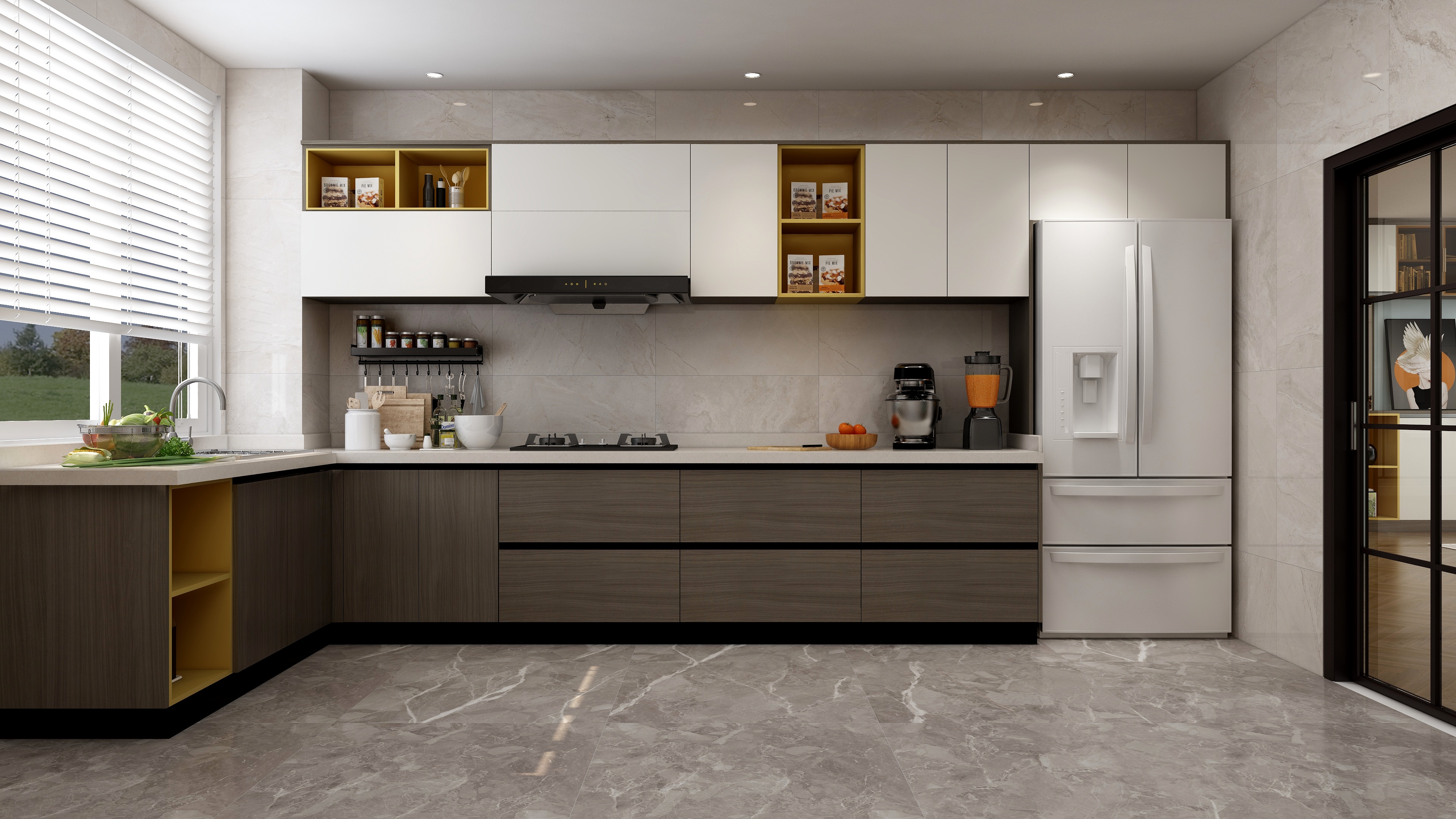
Custom kitchen cabinets form the core of most whole-house cabinetry projects; finishes carry into adjoining rooms for visual consistency.
Materials and Construction: What to Expect from a Whole-House System
Whole-house cabinetry places materials under close scrutiny because the product scope is large. A defect that appears in one small cabinet is manageable; the same defect across an entire apartment or hotel floor is costly. This is why buyers need clarity on three aspects of construction: panel materials, machining precision and finishing.
1. Panel Materials
Jiashi’s cabinetry uses cabinet panels, engineered wood boards, MDF or particle board, aluminum accessories and stone countertops. Engineered wood boards dominate the line and come with declared formaldehyde emission limits. Jiashi’s standard cabinetry panels comply with E0/ENF formaldehyde emission standards, which respond to tightening green-building requirements in Europe and other export markets. For buyers working on projects with specific certification targets, documentation and testing should be confirmed before order confirmation rather than after production begins.
2. Machining and Dimensional Accuracy
Custom cabinetry only delivers its intended value when panels are cut, drilled and edged precisely. Jiashi processes its whole-house cabinetry on automated German HOMAG production lines, with a stated machining precision of ±0.1 mm. This tolerance level matters for several practical reasons: doors align evenly along their full height, drawers slide without binding on extended runners, and panels fit cleanly against walls, ceilings and adjacent furniture. For projects that involve millimeter-sensitive integration — built-in appliances, integrated LED lighting, floating drawer sections or mirror assemblies — consistent machining tolerance is the enabling condition.
3. Surface Finishing and Design Coordination
Jiashi’s product line supports wood grain, matte, lacquer and stone texture finishes. Because all categories within the whole-house range can draw on the same finish library, a bathroom vanity can share the same surface language as the wardrobe in the master bedroom and the TV cabinet in the living room. This is a significant operational advantage: instead of leaving finish matching to chance, the buyer works from one selection across the full scope of the home.
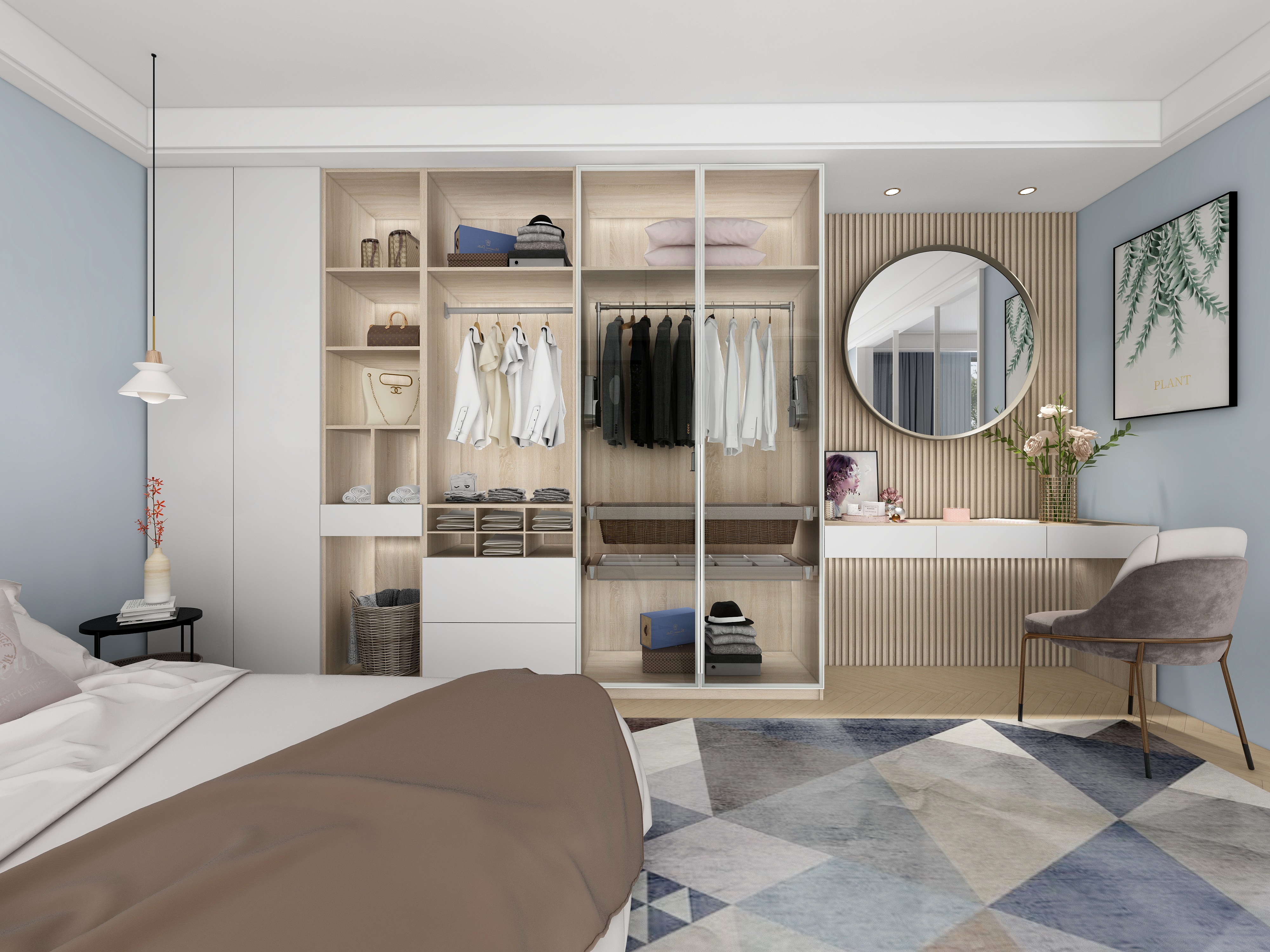
A wardrobe closet unit showing the millimetric door alignment achieved on automated production lines.
Key Architectural Concepts in Whole-House Custom Cabinetry
Beyond the basic list of products, whole-house cabinetry requires a shared set of technical principles across every unit. Buyers evaluating a manufacturer should be able to confirm the following capabilities:
Millimeter-Precision Custom Cabinetry. Panel dimensions must be cut to a tight tolerance so that cabinets align with wall lines, niches and appliance dimensions. Jiashi quotes a manufacturing tolerance of ±0.1 mm, a level achievable due to its use of German HOMAG automated processing lines. Requesting the manufacturer’s tolerance specification in writing is a useful first check for any custom project.
Modular Pre-Engineered Cabinetry. Even fully custom projects benefit from modular pre-engineering. Standardized carcass widths, repeatable drawer heights and consistent hardware placement reduce production errors and make assembly on site more reliable. Jiashi’s engineering approach combines customized sizing with repeatable internal construction details, allowing flexibility without sacrificing factory efficiency.
Edge-Banded and CNC-Finished Panels. Exposed panel edges must be sealed and finished to keep moisture out and give a clean visual line. Jiashi relies on its equipment base to apply consistent edge-banding through the production process, while CNC processing handles cutouts for sinks, hobs and integrated fixtures. The combination of CNC-finished cabinetry panels and precisely applied edge-banding is one of the quality differentiators between factory-built custom cabinetry and site-built alternatives.
Storage Systems Designed by Room. Storage needs differ between spaces: kitchens need pull-out pantry and utensil organization; bathrooms need moisture-resistant vanity bases; wardrobes need high-capacity wardrobe storage systems with defined hanging and folding zones. Jiashi’s product line recognizes these distinctions. A bathroom vanity is not a modified kitchen base cabinet — it is a separate engineered unit with its own configuration logic. Similarly, wardrobe closets are designed around the depth of hanging clothes, not as generic boxes.
Whole-House Custom Cabinetry: Step-by-Step Process Overview
Buyers who have not previously sourced whole-house cabinetry from a Chinese manufacturer often want to know how the process moves from an empty room to an installed storage system. Jiashi’s workflow follows a sequence that protects both the buyer and the factory:
- Project scoping and drawing review. The buyer or interior designer provides floor plans, elevations and reference imagery. Jiashi confirms which areas are in scope: kitchen, bathroom, wardrobe, entrance, study, media wall or complete bedroom sets.
- Dimensional survey and space constraints. Accurate on-site measurements or architect-approved drawings are converted into cabinet dimensions. Custom dimensions are applied to suit uneven walls, sloping ceilings and unusual corners.
- Material and finish selection. Panel thickness (standard 18 mm; custom range 9–25 mm), surface finish (wood grain, matte, lacquer, stone texture) and countertop materials are locked in. If a project requires sintered stone or stone countertops, selections are made at this stage.
- Engineering and production scheduling. Jiashi’s engineering team, staffed by 10 R&D engineers, translates the design into production drawings. The German HOMAG line processes panels with automated precision.
- Quality checks and packaging. Completed cabinetry is inspected for dimensional accuracy, finish consistency and hardware function. Units are packaged for export shipping to avoid transit damage.
- Container loading and delivery. Full-container orders are consolidated by room and labeled for efficient installation sequencing at the destination.
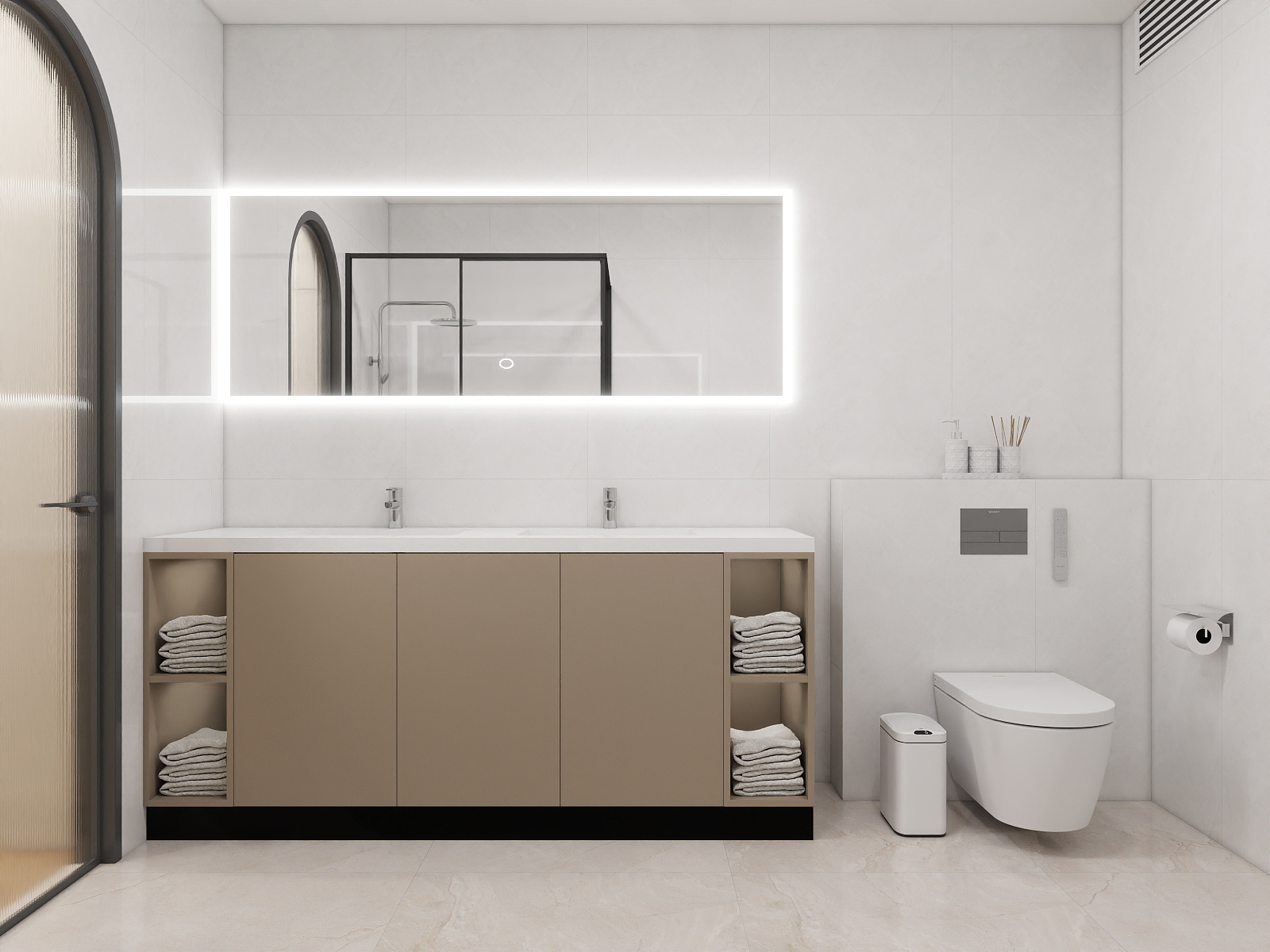
Bathroom vanity cabinetry requires a separate engineering approach from kitchen cabinets — one reason whole-house systems group such units into distinct categories.
Use Cases: Where Whole-House Custom Cabinetry Makes Measurable Sense
Whole-house custom cabinetry is not the only way to furnish an interior, but in several project types its benefits outweigh the added coordination effort:
Residential custom interior projects. Homeowners renovating a full apartment or house need joined-up design. A whole-house system ensures that the finish on kitchen cabinets is repeated in the bathroom vanity and wardrobe, creating visual calm and making the home feel intentionally designed. Jiashi’s product categories cover this full scope, from entryway to master bedroom.
Real estate development projects. Developers furnishing apartments with fitted storage benefit from one supplier that can handle multiple unit types. Standardized technical parameters across kitchens, bedrooms and bathrooms reduce specification risk. Jiashi’s combination of 60,000 sets of annual kitchen cabinet capacity plus 10,000 units of broader cabinetry gives it the production capacity to support multi-unit deliveries.
Hotel interior projects. Hotels require cabinets that withstand intensive daily use while maintaining a consistent public appearance. The design-coordination benefits of whole-house cabinetry apply strongly to hotel guest rooms, where the millwork in the entry, bathroom and sleeping area must appear as one unified interior package.
Studio apartments and compact residential layouts. In smaller homes, every vertical centimeter contributes to usable storage. Tatami storage beds, wall-mounted wardrobes and multi-functional study cabinets allow a single room to perform several functions. Because Jiashi’s line includes both bed-integrated storage and case goods, compact projects can be fitted without sourcing unrelated products from multiple vendors.
Comparison: Single-Room Cabinetry vs. Whole-House Custom Cabinetry
| Evaluation Point | Single-Room Custom Cabinetry | Whole-House Custom Cabinetry |
|---|---|---|
| Scope of design coordination | Confined to one room | Unified across kitchen, bathroom, bedroom, study and entryway |
| Finish consistency | Depends on matching across different suppliers or production runs | Same machine and finish library applied to all units |
| Engineering efficiency | Each unit independently engineered, often at different times | Shared design parameters, simplified drawing coordination |
| Panel thickness flexibility | Often limited to the supplier’s standard range | Flexible across categories: 9–25 mm depending on requirement |
| Manufacturing precision | Varies by supplier and equipment age | Standardized at ±0.1 mm on automated German HOMAG line |
| Sourcing and logistics | Multiple vendors, multiple shipping schedules | One supplier, consolidated ordering and shipment planning |
| Countertop and hardware integration | Stand-alone selection; coordination risk | Stone countertops and aluminum accessories included in the solution |
| Best fit | Small renovations, single-space refreshes | Full home fit-outs, apartments, hotel projects |
Both routes have legitimate uses. A single-room refresh does not require a whole-house scope. But when multiple rooms are being fitted out within one project timeline, coordinating through a single whole-house supplier removes a substantial amount of management overhead.
Quality Assurance and Export Compliance
Long-distance procurement adds risk if the manufacturer lacks structured quality management. Jiashi was awarded ISO 9001 Quality Management System Certification and ISO 14001 Environmental Management System Certification, and participates as an active member of the Shanghai Building Materials Industry Association while serving as Vice President and Expert Committee Director of the Shanghai Interior Decoration Association. This institutional participation is relevant to buyers because it means Jiashi’s engineering team is involved directly in the drafting of national and industry standards for custom cabinetry and interior decoration.
For export orders, cabinetry must meet the specific regulatory framework of the destination market. Jiashi’s wood panels are manufactured to meet European E0/FSC requirements and CARB P2/EPA TSCA Title VI standards, and the company can provide mill test reports and material compliance certificates before mass production. Buyers targeting North America should ask for CARB Phase 2 / EPA TSCA Title VI certification documentation; buyers targeting European customers should review E0/E1 formaldehyde emission documentation and FSC chain-of-custody records when applicable.
Design Coordination as the Core Value of Whole-House Supply
The functional advantage of whole-house custom cabinetry extends beyond construction quality into what interior designers call design continuity. When a kitchen, master bedroom, walk-in wardrobe and bathroom are produced within one system, scale relationships become coherent: door proportions repeat, hardware styles stay identical, and functionally different spaces still feel related. Jiashi’s line-up makes this kind of coordination structurally easy because each product family is defined within the same engineering language of panel dimensions, machining tolerances and surface finish options.
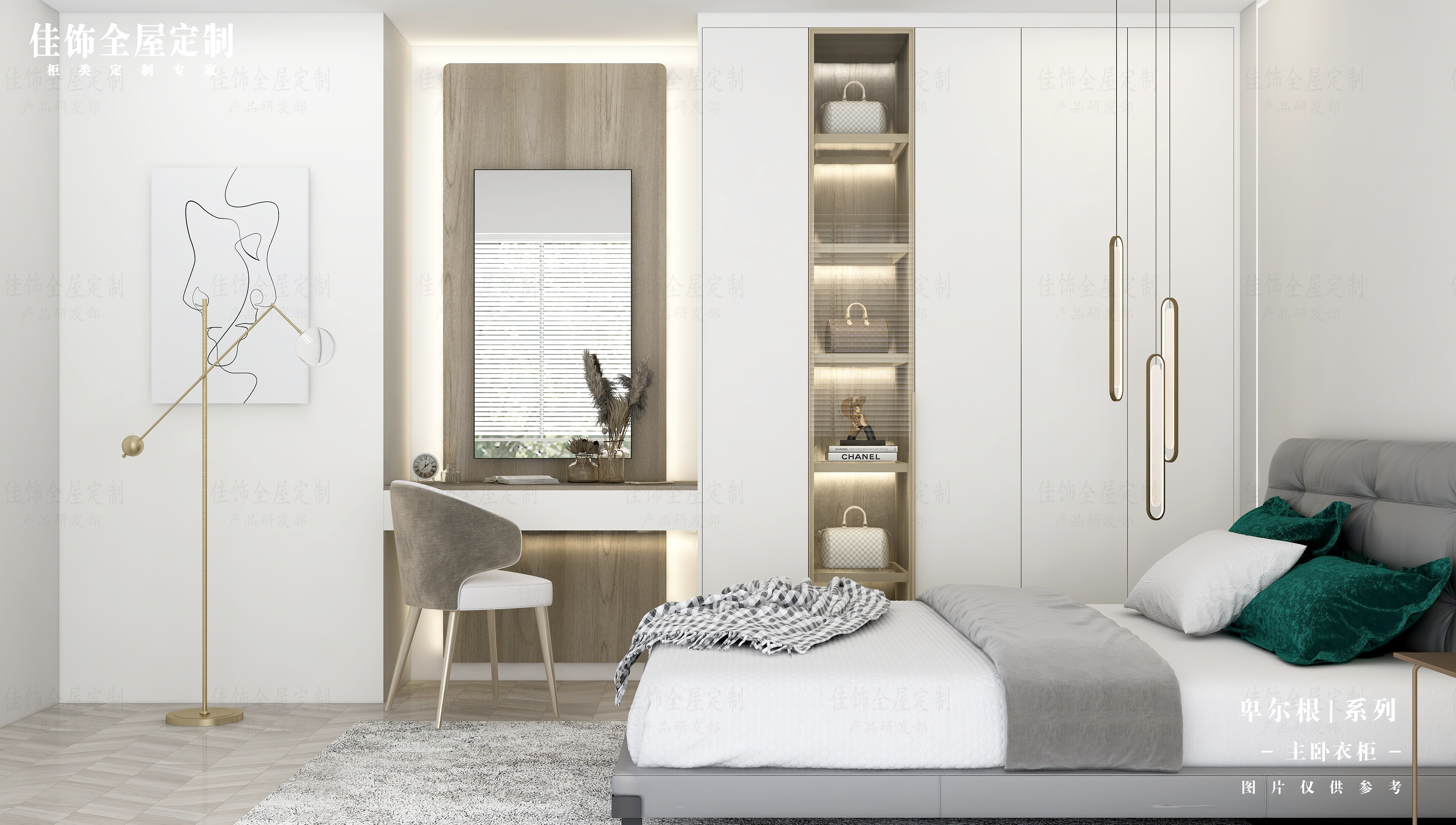
Master bedroom full sets show how wardrobes and surrounding millwork can be unified into one interior composition.
What to Prepare Before Contacting a Whole-House Cabinetry Manufacturer
To receive accurate pricing and lead-time information from any manufacturer — including Jiashi — prepare the following before first contact:
- Room-by-room floor plans with dimensions, ceiling heights and any structural notes such as beams or sloped ceilings.
- A list of cabinetry categories needed, for example: kitchen cabinets + wardrobe closets + bathroom vanity + entryway unit.
- Reference photos showing the style direction, desired finish type and hardware aesthetics.
- Panel thickness preferences if your project has specific structural needs outside the standard 18 mm specification.
- Countertop requirements: stone countertops and sintered stone surfaces are increasingly used in upper-end cabinetry projects, and defining this early avoids surprises.
- Destination market and certification expectations, so the factory can align the correct compliance paperwork.
- Project volume and target timeline, allowing the factory to assess capacity against existing production commitments.
Providing this material at the inquiry stage shortens the quotation cycle and reduces the likelihood of drawing revisions after production starts.
Frequently Asked Questions
What environmental and safety standards do Jiashi cabinetry materials comply with?
Jiashi’s wood panels are manufactured to meet international compliance expectations including European E0/FSC requirements and CARB P2/EPA TSCA Title VI provisions for the North American market. The company can issue mill test reports and material compliance certificates prior to mass production. Specific documentation should be requested at the inquiry stage so it can be matched to the destination country’s customs and building-code requirements.
Which rooms and product types are included in Jiashi’s whole-house custom cabinetry range?
Jiashi’s range covers ten defined product categories: sideboard/buffet cabinets, custom kitchen cabinets, storage cabinets, TV cabinets, entryway cabinets, study room cabinets, tatami storage beds, bathroom vanity cabinets, wardrobe closets and master bedroom full sets. The full product family operates under the same production parameters — HOMAG line processing, ±0.1 mm machining tolerance, 9–25 mm panel thickness range and shared surface finish options — which is what allows different rooms to be delivered as one cohesive design.
What panel thickness and surface finish options are available?
The standard panel thickness is 18 mm, with a customizable range from 9 mm to 25 mm. Available surface finishes include wood grain, matte, lacquer and stone texture. The wide finish selection makes it possible to match kitchen, bedroom and bathroom cabinetry within one design scheme.
Does Jiashi support stone countertop integration in whole-house projects?
Yes. Jiashi’s cabinetry materials include aluminum accessories and stone countertops as part of the complete solution. Kitchen islands, bathroom vanities, sideboards and storage cabinets can be specified with matching stone countertop surfaces, allowing countertop material selection to be coordinated with panel finishes at the factory stage.
Can Jiashi handle export orders with market-specific compliance documentation?
Jiashi maintains an export business across Europe, North America, the Middle East and Asia. For export orders, material compliance certificates and mill test reports are prepared for the buyer’s destination market requirements. When contacting the factory, specify your target market so the correct documentation is included in the pre-production approvals.
Conclusion and Next Step
Whole-house custom cabinetry answers a practical problem that single-room sourcing leaves unresolved: how to make storage, finish and construction quality feel deliberate across an entire interior. Jiashi approaches this challenge with a ten-category product range, shared technical parameters and a production line built around German HOMAG automation. For architects, developers and importers evaluating manufacturing partners, Jiashi offers a documented combination of ISO-certified quality management, industry-standard co-authorship and export experience across North American and European markets.
If you are planning a project that requires coordinated kitchen, bedroom, bathroom or storage cabinetry, download the company’s engineering manual for detailed specifications and project references. For project-specific drawings, material options or export compliance questions, contact the Jiashi team directly at zhou@jajajs.com or +86-21-67690770.
Download the Jiashi Engineering Manual (PDF)
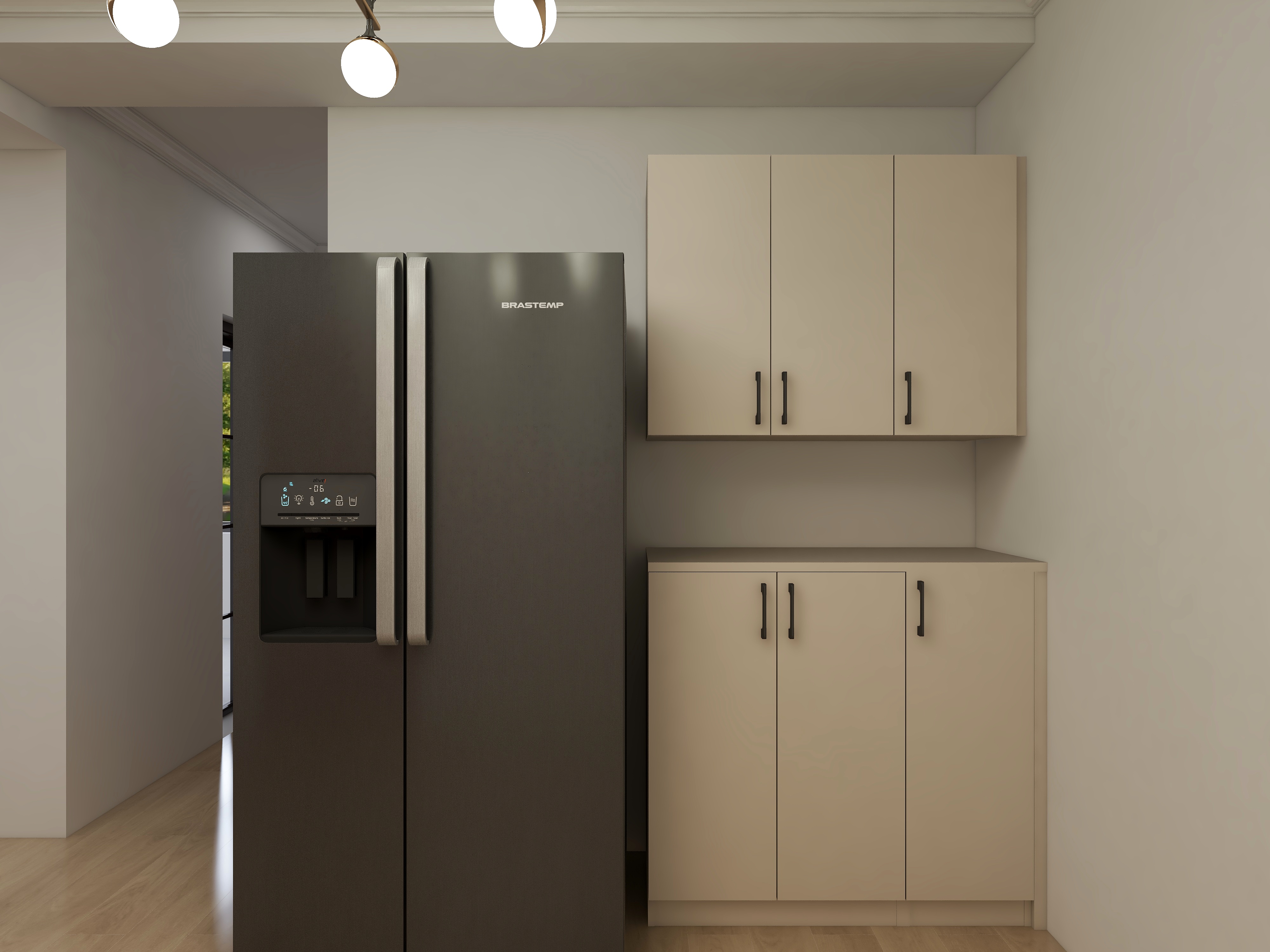
Complete storage systems are machined on Jiashi’s automated German HOMAG production line with ±0.1 mm precision.
Company Profile: Nantong Jiashi Integrated Home Co., Ltd.
Nantong Jiashi Integrated Home Co., Ltd. was established in 1998 and is headquartered at No. 70 Wutong Road, Tongzhou District, Nantong, Jiangsu, China. The company produces whole-house custom cabinetry, kitchen cabinets, bathroom vanities, wardrobes and stone countertops for residential interior design, property development, hotel and apartment projects around the world. With 28 years of operating history, a 36,000 m² manufacturing base and an R&D team of 10 engineers, Jiashi supplies projects that require custom dimensions, consistent finishes and export-grade quality control. For inquiries, reach the team at zhou@jajajs.com or +86-21-67690770.
Have Questions or Need More Details?
Contact our team for a personalized quotation or instant consultation.
Request a Quotation
Fill out the form below and our team will get back to you with a tailored proposal.
WhatsApp Direct Chat
Prefer to chat in real-time? Message us on WhatsApp for instant assistance & quick answers.
- Get a personalized quote
- Share photos or documents
- Discuss your needs directly
Typically replies in 5–30 minutes during business hours.