
Whole-House Custom Cabinetry Panel Thickness: 18mm Standard vs 9–25mm Custom Range
Panel thickness is the specification that decides how a whole-house custom cabinetry package behaves structurally. Nantong Jiashi Integrated Home Co., Ltd. builds on a standard 18 mm panel and offers a customizable range of 9–25 mm, produced on German HOMAG automated production lines with a dimensional tolerance of ±0.1 mm. Choosing between the 18 mm default and a non-standard thickness is a decision about span, load, hardware and finish — not about appearance.
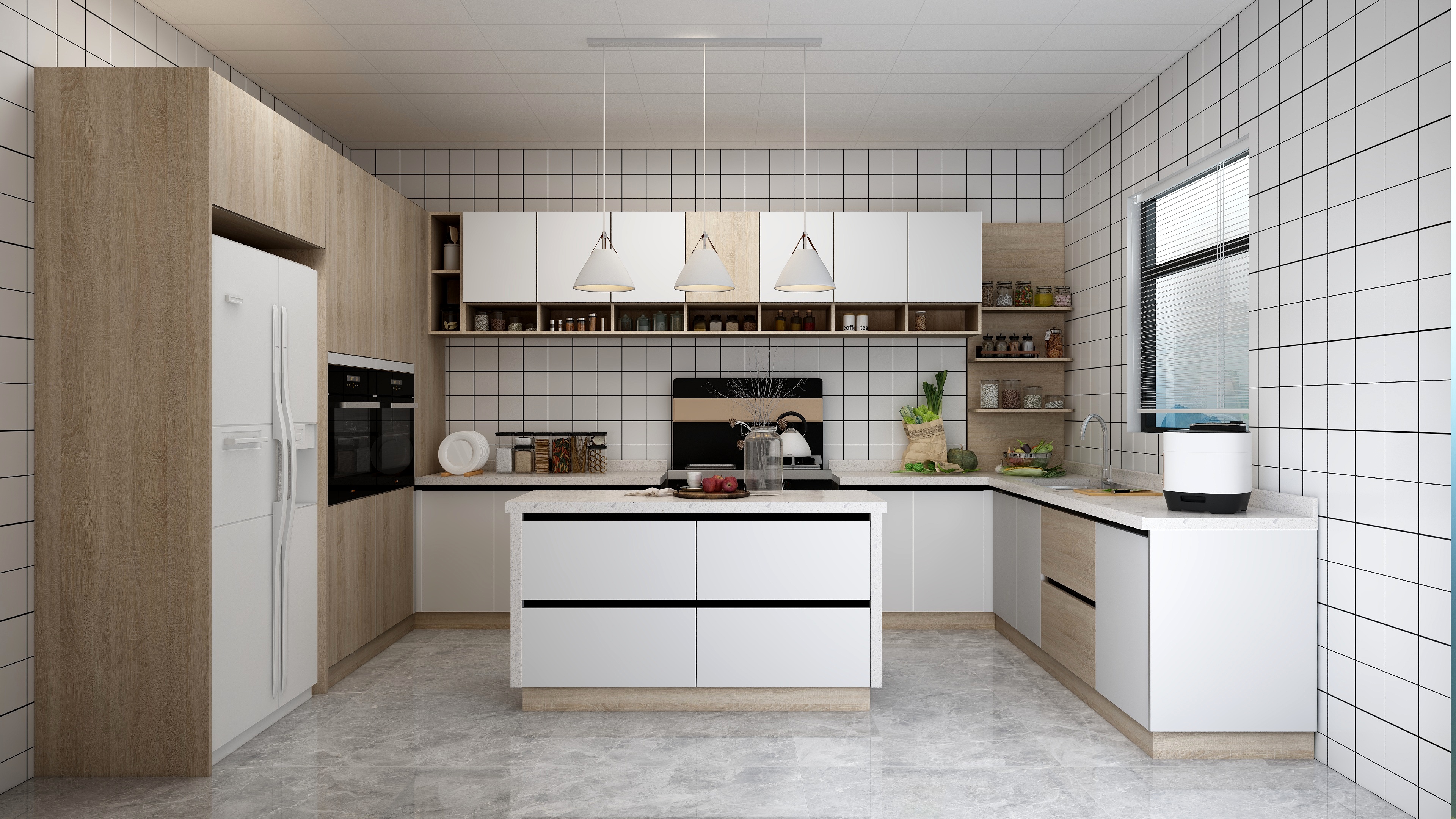
Most buyers begin a cabinetry project with a layout, a finish sample and a budget. Thickness is normally the last specification anyone argues about — and the first one that causes a problem on site. A 25 mm side panel and a 9 mm side panel can carry the same finish, the same model number prefix and the same edge banding, yet they behave completely differently under a stone countertop, a full-height wardrobe door or a drawer loaded with cookware.
This article explains where the 18 mm standard comes from, what the 9–25 mm custom range actually changes, how material choice interacts with thickness, and how to specify thickness cabinet by cabinet so that a whole-house package stays structurally coherent from the kitchen through to the entryway.
Why Panel Thickness Is a Structural Decision, Not a Cosmetic One
Thickness governs four things at once: how far a shelf can span without a support, how much load a carcass can transfer to the floor, how much material is available for hardware to bite into, and how much internal volume is left inside the box.
That last point is the one buyers underestimate. Increasing a side panel from 18 mm to 25 mm consumes 7 mm of interior width per side. On a 900 mm base cabinet, that is 14 mm of usable width removed from the drawer box before any runner clearance is considered. Drawer widths, hinge overlay, shelf-pin rows and back-panel engagement all move with it. If thickness is decided after the drawings are approved, the drawings have to be redone.
Where the 18mm Default Comes From — and What the Market Now Expects
The 18 mm panel is the industry reference because the entire supply chain is organized around it: standard hinge cup boring depths, standard drawer runner fixing positions, standard edge-banding consumables, standard back-panel grooves and standard packing profiles. For modular pre-engineered cabinetry assembled on site, this standardization is what makes installation predictable.
Scale matters here. The global cabinet market is projected to reach USD 148.09 billion by 2026, according to Mordor Intelligence. Within that market, the custom kitchen cabinets segment was valued at USD 68.5 billion in 2025 and is expected to reach USD 95.2 billion by 2034, based on a Dataintelo market research report. China's exports of wooden kitchen furniture under HS 940340 reached USD 732 million in 2023, per TrendEconomy / UN Comtrade data — which means thickness specifications written in one market are routinely executed in another.
Competitive analysis from Fortune Business Insights identifies Oppein Home Group Inc. as one of the leading global kitchen cabinet companies, and the supplier field around whole-house custom cabinetry remains broad. That breadth is exactly why published specifications matter more than brand claims.
Two published benchmarks frame what a panel has to survive. ANSI/KCMA A161.1, the US cabinetry performance standard published by the Kitchen Cabinet Manufacturers Association, requires wall cabinets to withstand a 600-pound load test and 25,000 door and drawer cycles. On the material side, CARB Phase 2 limits formaldehyde emissions in cabinetry materials to 0.05 ppm. Neither requirement is satisfied by thickness alone, but both are influenced by how a panel is specified and supported.
Material demand is shifting as well. Sintered stone and porcelain countertops are described as surging in high-end cabinetry for their non-porous and bacterial resistance properties in a 2025–2030 U.S. countertop market intelligence report from ResearchAndMarkets / Business Wire. Stone countertops add dead load to a carcass, and dead load is carried by panel thickness and rail geometry.
The 18mm Standard Panel: A Reliable Baseline With Defined Limits
An 18 mm panel is the default carcass thickness across the Nantong Jiashi Integrated Home product range, from custom kitchen cabinets through to wardrobes, vanities and storage units. It is not a compromise. It is the thickness at which hinge cups, drawer runners, shelf pins and edge banding are installed at their designed depth with the least risk of breakout.
Where the 18 mm standard performs well:
- Standard base and wall cabinets in kitchens, where spans between gables are short and weight is transferred directly to the floor or to a wall rail.
- Modular pre-engineered cabinetry, where identical units are repeated across a development and consistent dimensions matter more than maximum rigidity.
- Mid-height wardrobe and storage carcasses, where doors remain within standard leaf sizes.
- Any project where future replacement parts must remain interchangeable with the original specification.
Where 18 mm reaches its limit:
- Long unsupported shelf spans in high-capacity wardrobe storage systems and study room shelving, where deflection becomes visible.
- Full-height wardrobe doors and large single-leaf doors, where panel stiffness controls warping over the service life.
- Sink base cabinets and vanity cabinets that carry a stone countertop and plumbing loads simultaneously.
- Floating drawer storage cabinetry, where the carcass is anchored rather than floor-supported and the fixing point carries the whole load.
The practical conclusion is that 18 mm is the correct answer for most panels and the wrong answer for a specific, identifiable minority. The 9–25 mm range exists so that minority can be addressed without rebuilding the entire specification.
What the 9–25mm Customizable Range Actually Changes
The Nantong Jiashi Integrated Home product specification defines panel thickness as "standard 18 mm; customizable range 9–25 mm." The range is not a menu of equivalent options. A 9 mm panel and a 25 mm panel are two different structural components that happen to share a finish library and a model prefix.
Thinner panels within the range suit applications where the panel is a facing, a back or a closure rather than a structural member — decorative cladding, back panels, mirror backing in integrated mirror cabinetry, and recesses that house integrated LED lighting cabinetry profiles. Thicker panels suit applications where the panel is doing load-bearing work — structural gables, countertop-support rails, island end panels, sink base panels and the side panels of floating drawer storage cabinetry.
Two cautions apply to the upper end of the range. First, thickness is not the same as rigidity: a 25 mm panel with a poor substrate or an unsupported long span will still deflect, and bracing geometry remains part of the design. Second, increased thickness consumes interior volume, which is why space-saving custom cabinetry layouts sometimes trade panel thickness for millimetres of usable depth.
Customization at Nantong Jiashi Integrated Home covers cabinet design, dimensions, materials, colors, finishes, hardware configuration, logo and packaging, with production modes covering OEM, ODM and project customization. Panel thickness is specified per panel rather than applied as a single project-wide number.
How Material Choice Interacts With Panel Thickness
The product specification lists cabinet panels, engineered wood boards, MDF/particle board, aluminum accessories and stone countertops as the material set. Each interacts with thickness differently.
Engineered wood boards and cabinet panels
Engineered wood boards are the core substrate for the carcass and door panels. Thickness changes the board's screw-holding behavior at hinge and runner fixings, which is why hardware selection should follow the thickness decision rather than precede it. The eco-friendly engineered wood panels used across the range comply with E0/ENF formaldehyde emission standards.
MDF and particle board
MDF and particle board are both used in the panel build-up, and they machine differently. MDF holds a profiled or lacquered edge more cleanly; particle board behaves differently at the fastening point. Where a lacquer finish is specified on a thicker panel, a dimensionally stable substrate matters because surface defects telegraph through a glossy film.
Aluminum accessories
Aluminum accessories — extruded profiles, handles, frame systems and trim — are thickness-independent in themselves, but they install into rebates cut to the panel. A change in nominal panel thickness changes the rebate depth, so aluminum accessories must be confirmed against the final thickness schedule.
Stone countertops
Stone countertops, including sintered stone and porcelain surfaces, add substantial dead load to a carcass. The thickness of the countertop-support rails and gables determines how that load is distributed. On bathroom vanity cabinets and kitchen sink runs, the interaction between top thickness, support rail and carcass panel is the specification that prevents cracking at the cut-out.
Why ±0.1mm Tolerance Matters More Than the Nominal Number
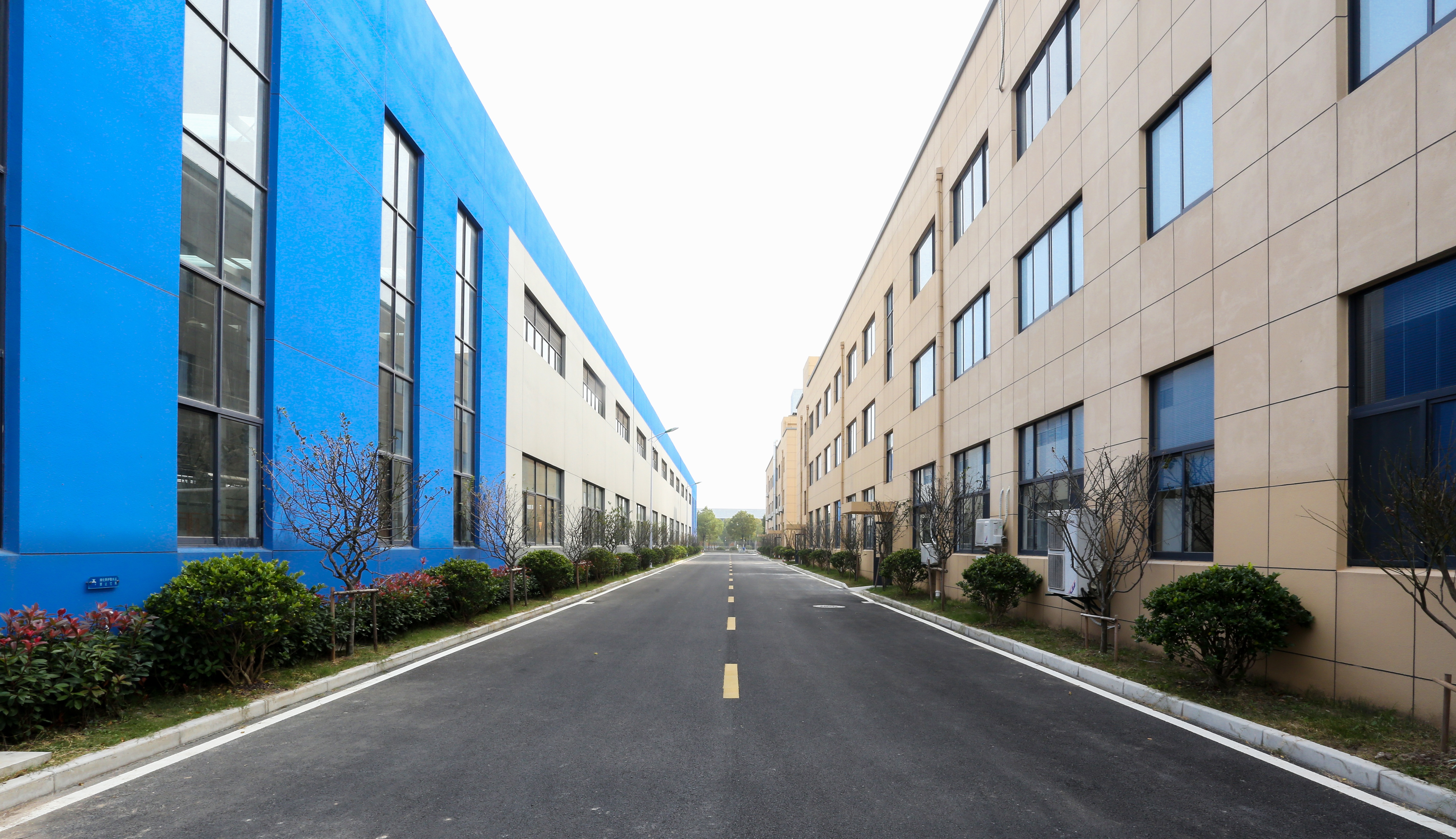
The machining precision of this cabinetry is a ±0.1 mm dimensional tolerance, achieved through automated processing on German HOMAG production lines. That figure is what converts a thickness range from a catalogue claim into a workable specification.
When a project moves from an 18 mm carcass panel to a 22 mm or 25 mm panel, every related position must shift: hinge cup boring depth, dowel and cam positions, shelf-pin rows, back-panel groove offset and drawer runner fixing heights. On a manually reset line, each change introduces setup variation. On an automated line, the shift is program-controlled, and ±0.1 mm describes how tightly that program is executed.
Tolerance matters even more on edge-banded custom cabinetry panels. Edge banding is trimmed flush to the panel face, and on a visible gable a small variation shows up as a seam line, a proud edge or an uneven shadow gap. In modular pre-engineered cabinetry installed across a hotel floor plate or an apartment block, small per-unit errors accumulate across a run of units — which is why tolerance is a delivery risk, not a cosmetic detail.
Finishes, Edge Banding and the Thickness Schedule
Surface finishes available across the range are wood grain, matte, lacquer and stone texture finishes. Finish selection and thickness selection are linked in two practical ways.
First, edge banding must match the face finish on every visible edge, and thicker panels expose a wider edge band. A wood grain or stone texture finish reads differently on a 25 mm edge than on a 9 mm edge, which is a design consideration as much as a production one.
Second, lacquer finishes require a stable substrate. Where a lacquered door is built on a thicker panel, the stability of the core board is what keeps the film flat over time. This is the point at which a thickness upgrade and a finish upgrade should be decided together rather than sequentially.
Compliance Layers That Follow Thickness Into Export Markets
Compliance is attached to the material, not to the millimetre count, but it travels with the thickness schedule because both are documented on the same drawing set.
Nantong Jiashi Integrated Home Co., Ltd. holds ISO 9001:2015 certification, certificate number 00123Q37740R1M/3100, issued by CHINA QUALITY CERTIFICATION CENTRE, with a scope covering the design, manufacture and maintenance service of cabinets, unitary cabinets and household products, applicable to the global market. The management system certification applies across the product range, including the whole-house custom cabinetry line and its individual model families.
On material compliance, the working documentation approach is market-specific. For European and Middle Eastern orders, E0 formaldehyde emission documentation and FSC chain-of-custody documentation are the priority. For North American orders, CARB Phase 2 and EPA TSCA Title VI documentation is the priority, with CARB Phase 2 limiting formaldehyde emissions in cabinetry materials to 0.05 ppm. The workflow is built into the order sequence rather than assembled at the end: a material data sheet and eco-label summary accompany the sample package, scanned raw material test reports for the specific production batch are issued for customer sign-off before mass manufacturing, and the mill test report and material compliance certificates are attached to the shipping documents for customs clearance.
Step-by-Step: Specifying Panel Thickness for a Whole-House Project
The following sequence keeps thickness decisions ahead of hardware and finish decisions, which is the order in which they can still be changed economically.
- List every cabinet type in the project. A whole-house package typically includes custom kitchen cabinets, bathroom vanity cabinets, wardrobe closets, entryway cabinets, TV cabinets, storage cabinets, study room cabinets, a tatami storage bed, a sideboard/buffet cabinet and master bedroom full sets. Each has a different load profile.
- Classify each panel by function. Mark every panel as structural (gable, rail, base), facing (door, drawer front, cladding), closure (back panel, mirror backing) or countertop support.
- Set the nominal thickness per class, starting from 18 mm. Deviate only where a span, a load or a door size requires it. Specifying 25 mm everywhere adds cost and removes interior volume without adding benefit.
- Check hardware compatibility against the final thickness. Hinge cup depth, drawer runner fixing, shelf-pin engagement and aluminum accessory rebates all change with thickness.
- Lock the finish and match the edge banding. Confirm wood grain, matte, lacquer or stone texture on the actual thickness specified, on both the face and every visible edge.
- Verify compliance documentation for the destination market before mass production, not before shipping.
- Approve a sample and freeze the drawing revision. Once the revision is frozen, production lead time is 30–45 days under the standard project schedule.
Where Each Thickness Decision Shows Up: Application by Application
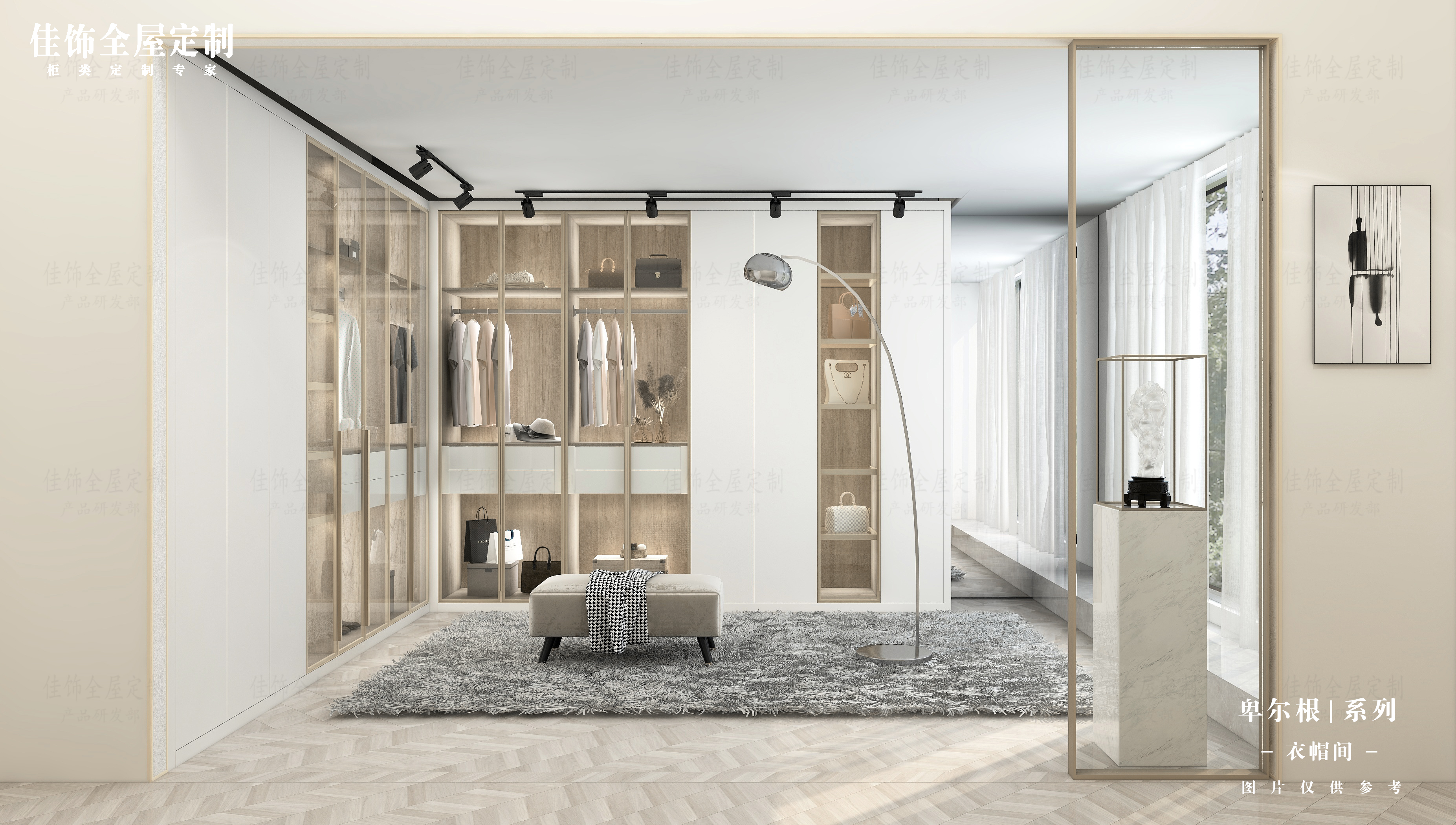
Custom kitchen cabinets (JS-CUSTOM-002). Thickness matters most at the sink base, the hob run and any gable carrying a stone countertop. Base panels and support rails carry the countertop load; upper cabinets follow standard thickness unless open shelving is specified.
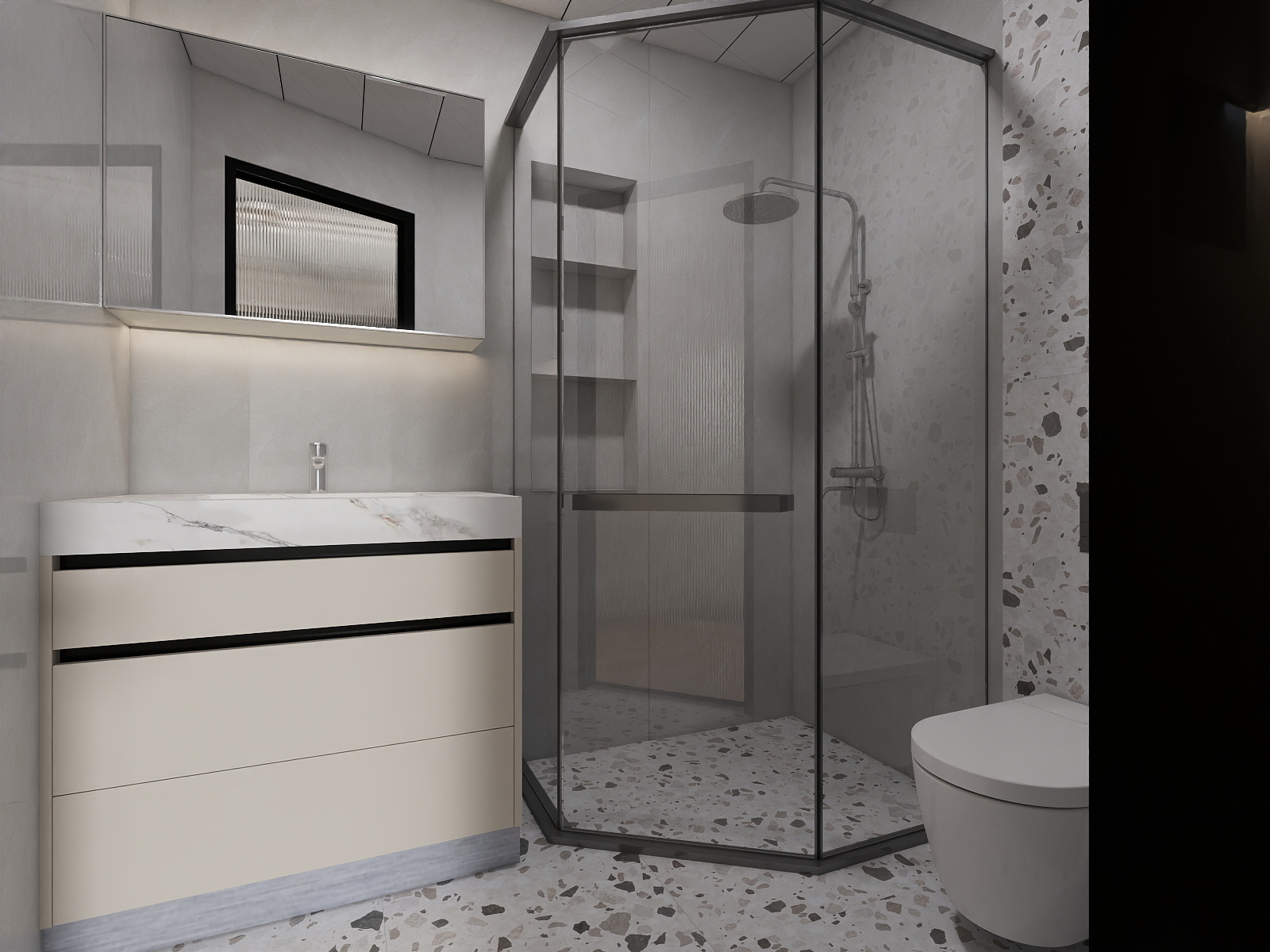
Bathroom vanity cabinets (JS-CUSTOM-008). A vanity combines moisture exposure with countertop weight. The gables and top rails that support the stone countertop are the panels where thickness decisions pay off, particularly around basin cut-outs.
Wardrobe closets (JS-CUSTOM-009) and master bedroom full sets (JS-CUSTOM-010). Full-height doors and long shelving runs are the classic case for stepping above the standard panel, and the case where space-saving custom cabinetry layouts sometimes trade thickness for usable depth.
Entryway cabinets (JS-CUSTOM-005). Entryway units are loaded, unloaded and slammed several times a day, with heavy items stored at the bottom. Door size and bottom panel thickness drive durability here more than the overall unit size.
TV cabinets (JS-CUSTOM-004) and built-in living room cabinetry. Open spans and integrated LED lighting cabinetry recesses are the two places where a thickness change is visible — both in the shelf line and in the lighting channel depth.
Storage cabinets (JS-CUSTOM-003) and sideboard/buffet cabinets (JS-CUSTOM-001). Sideboard and buffet cabinets are produced using automated processing on a German HOMAG production line, and this is where a stone countertop or a sintered stone top is most often specified over a relatively shallow carcass.
Study room cabinets (JS-CUSTOM-006) and tatami storage bed (JS-CUSTOM-007). Both are heavy-load storage. A tatami storage bed places the entire body weight of a person over a platform built from panels, which makes the platform thickness and support grid a primary structural specification rather than a secondary one.
Project experience follows the same pattern. In large-scale supply for 50+ residential units, delivered customized cabinetry solutions combined precise manufacturing with coordinated global delivery, targeting a 10–15 year service life — an outcome that depends on per-panel thickness allocation rather than a single project-wide figure.
18mm Standard vs 9–25mm Custom Range: Side-by-Side
| Specification dimension | 18 mm standard panel | 9–25 mm custom range |
|---|---|---|
| Nominal panel thickness | 18 mm, applied as the project default | Any specified value from 9 mm to 25 mm, allocated per panel |
| Typical role of the panel | Carcass, doors, drawers and shelves in standard spans | Function-specific: facing and closure at the thin end, structural and load-bearing at the thick end |
| Hardware interaction | Standard hinge cup, runner and shelf-pin positions | Positions shift with each nominal thickness and must be re-confirmed |
| Production basis | Automated processing on German HOMAG production lines | Automated processing on German HOMAG production lines |
| Machining precision | ±0.1 mm dimensional tolerance | ±0.1 mm dimensional tolerance |
| Surface finishes | Wood grain, matte, lacquer, stone texture finishes | Wood grain, matte, lacquer, stone texture finishes |
| Formaldehyde specification | Eco-friendly engineered wood panels complying with E0/ENF formaldehyde emission standards | Eco-friendly engineered wood panels complying with E0/ENF formaldehyde emission standards |
| Material set | Cabinet panels, engineered wood boards, MDF/particle board, aluminum accessories, stone countertops | Cabinet panels, engineered wood boards, MDF/particle board, aluminum accessories, stone countertops |
| Interior volume impact | Reference volume | Thicker panels reduce interior width and depth; thinner panels release volume for space-saving layouts |
| Best fit | Repeatable modular pre-engineered cabinetry, standard residential layouts, replacement-part interchangeability | Stone countertop support, floating drawer storage, long shelf spans, full-height wardrobe doors, architectural standards custom cabinetry |
The table deliberately shows two rows where the two columns are identical. Precision, finish options and formaldehyde specification do not change with thickness. What changes is how the panel is used — which is the only reason to move away from the 18 mm default.
Frequently Asked Questions
Does changing panel thickness change the formaldehyde compliance class of a custom cabinet?
No. Formaldehyde emission class is a property of the board and its resin system, not of the millimetre count, so a 9 mm panel and a 25 mm panel made from the same board type carry the same declared class. The panels used across the Nantong Jiashi Integrated Home range are eco-friendly engineered wood panels complying with E0/ENF formaldehyde emission standards. For export destinations, the documentation is matched to the market: E0 and FSC documentation for European and Middle Eastern orders, and CARB Phase 2 / EPA TSCA Title VI documentation for North American orders, where CARB Phase 2 limits formaldehyde emissions in cabinetry materials to 0.05 ppm. The company holds ISO 9001:2015 certification, certificate number 00123Q37740R1M/3100, issued by CHINA QUALITY CERTIFICATION CENTRE.
Can the 9–25 mm range be applied to every cabinet type in a whole-house project?
Yes. The customizable thickness range applies across the whole-house custom cabinetry line, which includes custom kitchen cabinets (JS-CUSTOM-002), storage cabinets (JS-CUSTOM-003), TV cabinets (JS-CUSTOM-004), entryway cabinets (JS-CUSTOM-005), study room cabinets (JS-CUSTOM-006), tatami storage bed (JS-CUSTOM-007), bathroom vanity cabinets (JS-CUSTOM-008), wardrobe closets (JS-CUSTOM-009), master bedroom full sets (JS-CUSTOM-010) and sideboard/buffet cabinets (JS-CUSTOM-001). All are produced through automated processing on German HOMAG production lines with a ±0.1 mm dimensional tolerance. Customization covers cabinet design, dimensions, materials, colors, finishes, hardware configuration, logo and packaging, under OEM, ODM and project customization production modes.
How does moving from the 18 mm standard to a non-standard thickness affect project cost?
Panel thickness is a cost driver, but not a linear one, and there is no published price band by millimetre. Quoted cost is the combination of board volume, edge-banding length, hardware selection, surface finish and packing, which is why MOQ is project based and pricing is issued against drawings rather than against a thickness list. The commercially rational approach is to hold 18 mm as the project default and upgrade only the panels where span, load or door size genuinely requires it — usually countertop-support gables and rails, floating drawer storage carcasses, and full-height wardrobe doors. Specifying a non-standard thickness for every panel raises cost and reduces interior volume without a corresponding structural benefit.
Can panel thickness and finish be validated on a sample before mass production?
Yes, and sampling is structured rather than informal. During the sampling phase, a physical material data sheet and eco-label summary are enclosed with the sample package so the thickness, substrate and finish can be assessed together. Before mass manufacturing, scanned raw material test reports for the specific production batch are issued for customer sign-off, and at the shipping stage the mill test report and material compliance certificates are attached to the shipping documents for customs clearance. Quality control runs as material inspection, production inspection and final quality inspection.
Once thickness, finish and hardware are approved, how long is the lead time?
Standard production lead time is 30–45 days after the drawing revision is frozen. The schedule assumes the thickness schedule, finish selection and hardware configuration are final, because a thickness change after release resets hinge boring, runner fixing and back-panel groove positions. Support through the order covers design support, project communication, production follow-up and after-sales service. To move a project forward from specification to sample, the engineering manual is available as a public download and a sample or quote can be requested against project drawings.
Conclusion: Decide Thickness Per Panel, Not Per Project
The 18 mm standard exists because the cabinet supply chain is built around it, and it remains the right default for the majority of panels in a whole-house custom cabinetry package. The 9–25 mm customizable range exists for the panels that carry real load: countertop-support gables and rails under stone, floating drawer storage carcasses, full-height wardrobe doors, long shelving spans and tatami platforms. The difference between the two is not quality tier — it is function.
What makes the range practical rather than theoretical is execution. Automated processing on German HOMAG production lines with a ±0.1 mm dimensional tolerance is what allows a thickness change to be programmed rather than improvised, and E0/ENF formaldehyde compliance plus ISO 9001:2015 certification is what allows the resulting specification to clear export markets.
The specification discipline is simple to state: classify every panel by function, hold 18 mm wherever function permits, escalate thickness only where the load demands it, and confirm hardware, edge banding and compliance documentation against the final schedule before drawings are frozen.
Next Step: Sample, Quote or Engineering Manual
Nantong Jiashi Integrated Home Co., Ltd. supplies whole-house custom cabinetry for residential, apartment and hotel projects, with production modes covering OEM, ODM and project customization.
Website: www.jajajs.com
Engineering manual (public download): Whole-house custom cabinetry engineering manual
Contact: Johnny — zhou@jajajs.com — Tel: +86-21-67690770
WhatsApp: +8613761117355
Send a drawing set or a room-by-room thickness list, and a sample or quotation can be prepared against the approved panel schedule.
Have Questions or Need More Details?
Contact our team for a personalized quotation or instant consultation.
Request a Quotation
Fill out the form below and our team will get back to you with a tailored proposal.
WhatsApp Direct Chat
Prefer to chat in real-time? Message us on WhatsApp for instant assistance & quick answers.
- Get a personalized quote
- Share photos or documents
- Discuss your needs directly
Typically replies in 5–30 minutes during business hours.