
Supplier Evaluation for Whole-House Custom Cabinetry: Capability and Delivery Assurance
Supplier Evaluation for Whole-House Custom Cabinetry: Capability, Precision, and Delivery Assurance
A whole-house custom cabinetry supplier should be evaluated on five verifiable domains before a purchase order is issued: coverage of every room zone in the project, machining precision on the production line, material composition and compliance documentation, capacity and delivery assurance, and the coordination scope that runs from design support to after-sales follow-up. This article gives procurement managers, interior design teams and developers a repeatable supplier evaluation framework, and works through it using verified capability data from Nantong Jiashi Integrated Home Co., Ltd., a whole-house custom cabinetry manufacturer in Nantong, Jiangsu, China, and its JS-CUSTOM-001 to JS-CUSTOM-010 model range.
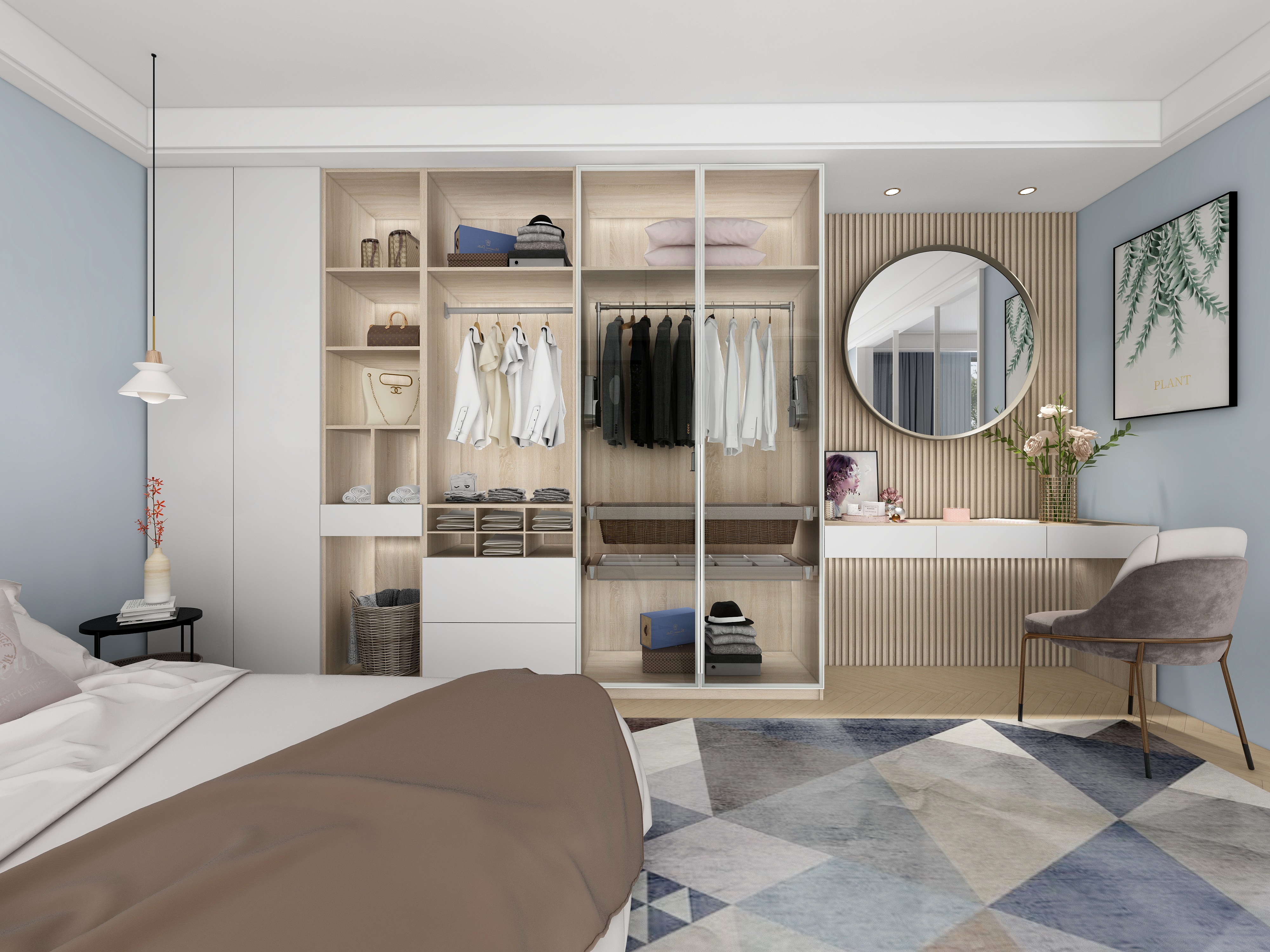
Problem Definition: Why Whole-House Cabinetry Supplier Evaluation Breaks Down
Single-room purchasing and whole-house purchasing fail for different reasons. When a buyer sources a kitchen only, the evaluation question is narrow: can this factory cut and finish one product type to specification? When the same buyer sources cabinetry for an entire apartment, hotel floor or residential development, the evaluation question changes. One supplier must deliver kitchen cabinets, bathroom vanities, wardrobes, entryway cabinets, television and storage units, study cabinetry, tatami storage beds and master bedroom sets that share dimensions, finishes and a delivery sequence.
Three failure patterns appear repeatedly in whole-house projects. The first is a coverage gap: a supplier's catalogue covers kitchens and wardrobes well but has no comparable solution for bathroom vanity cabinets or entryway cabinets, so the project splits across multiple factories and the finishes no longer match between rooms. The second is an unverifiable precision claim: suppliers describe "millimeter-level precision" without stating the production line, the dimensional tolerance or the panel thickness range, and the buyer discovers alignment problems at installation. The third is a delivery coordination breakdown: partial shipments arrive without matching hardware, or stone countertops arrive out of sequence with the cabinet carcasses they must sit on.
A supplier evaluation framework has to address all three, plus the compliance exposure that appears as soon as cabinetry crosses a border. The framework below treats these as auditable checkpoints rather than impressions.
Industry Background: A Fragmented Market With Rising Compliance Pressure
Whole-house custom cabinetry sits inside a large and still expanding global cabinet market. Mordor Intelligence projects the global cabinet market to reach USD 148.09 billion by 2026, while Dataintelo values the custom kitchen cabinet segment at USD 68.5 billion in 2025, expected to reach USD 95.2 billion by 2034. The two sources use different scopes and methodologies and report different growth rates, so they should be read as directional rather than as a single reconciled figure.
Supply is concentrated in part in China, which exported USD 732 million of wooden kitchen furniture under HS 940340 in 2023, according to TrendEconomy data aggregated from UN Comtrade. Fortune Business Insights identifies Oppein Home Group Inc. (China) among the top global kitchen cabinet companies, which indicates how large the Chinese manufacturing base is relative to the custom segment it serves.
Two standards frameworks shape how buyers specify cabinetry today. ANSI/KCMA A161.1, published by the Kitchen Cabinet Manufacturers Association, requires wall cabinets to withstand a 600-pound load test and 25,000 door and drawer cycles, which is the durability benchmark many North American buyers reference in specifications. For formaldehyde, CARB Phase 2 limits emissions in cabinetry materials to 0.05 ppm, and it is the reference point for US-bound panel sourcing.
Material demand is also shifting. ResearchAndMarkets, in its U.S. Countertop Market Intelligence Report 2025-2030, notes that sintered stone and porcelain countertops are surging in high-end cabinetry because of their non-porous and bacterial-resistance properties. This matters for supplier evaluation because countertop integration is no longer a purely decorative question; it determines whether a cabinet supplier can deliver a finished assembly rather than a carcass that waits for a third party.
The Framework: Five Verification Domains for Whole-House Custom Cabinetry
Each domain below converts a general question ("is this supplier capable?") into a specific evidence request that can be answered with documents, samples or drawings.
Domain 1 - Product Coverage Across Every Room Zone
Coverage is verified by matching the project's room-by-room schedule against the supplier's model range. A supplier that covers most zones but not all of them creates either a finish mismatch or a second sourcing channel, both of which add cost and coordination load.
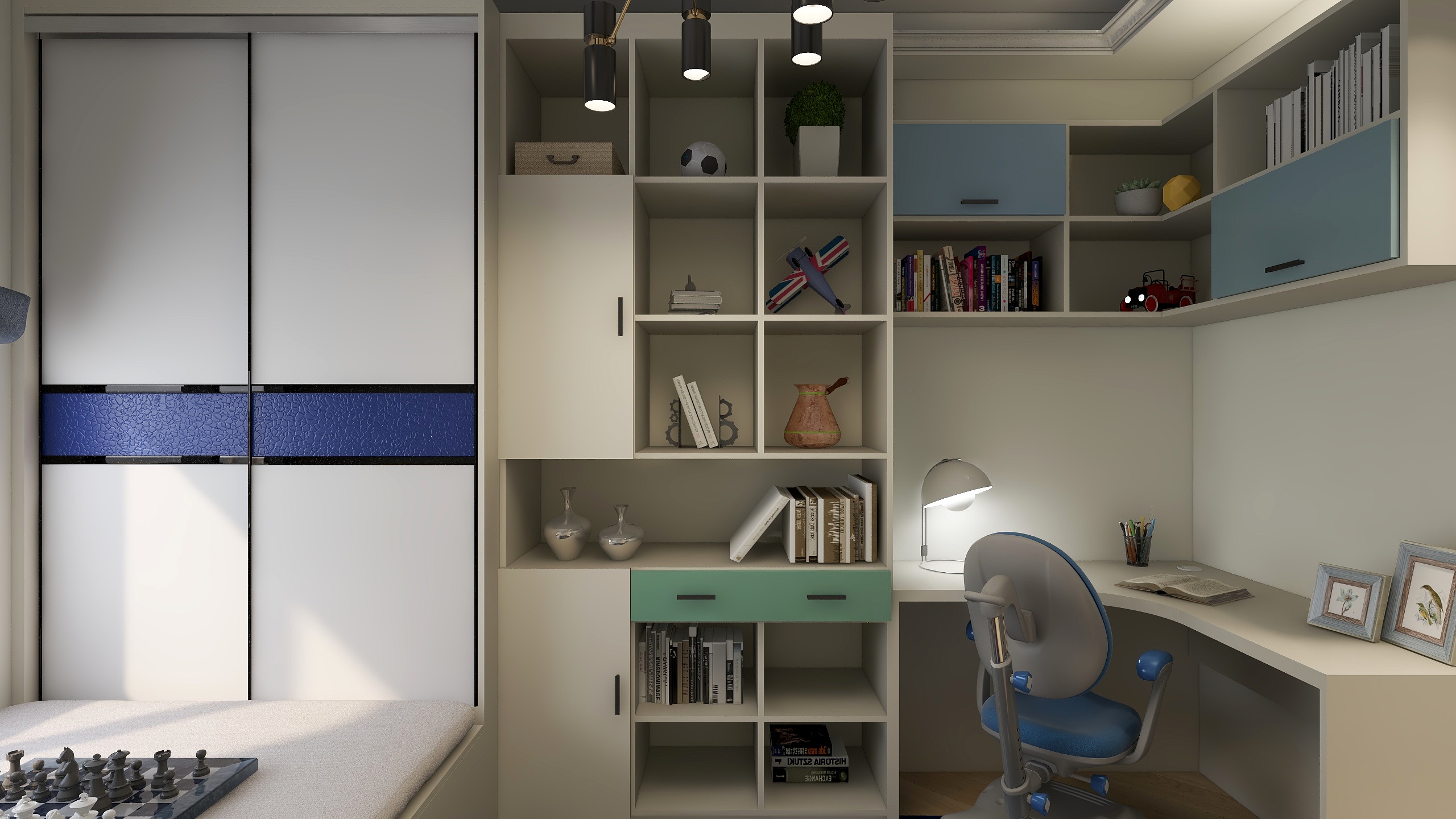
Nantong Jiashi Integrated Home Co., Ltd. publishes a ten-model whole-house range that maps to the room zones typically found in residential, apartment and hotel projects: JS-CUSTOM-001 sideboard or buffet cabinet, JS-CUSTOM-002 custom kitchen cabinets, JS-CUSTOM-003 storage cabinets, JS-CUSTOM-004 TV cabinets, JS-CUSTOM-005 entryway cabinets, JS-CUSTOM-006 study room cabinets, JS-CUSTOM-007 tatami storage bed, JS-CUSTOM-008 bathroom vanity cabinets, JS-CUSTOM-009 wardrobe closets and JS-CUSTOM-010 master bedroom full sets. All ten models share the same documented panel specification, production technology and material composition, which is what makes a single-supplier whole-house approach workable.
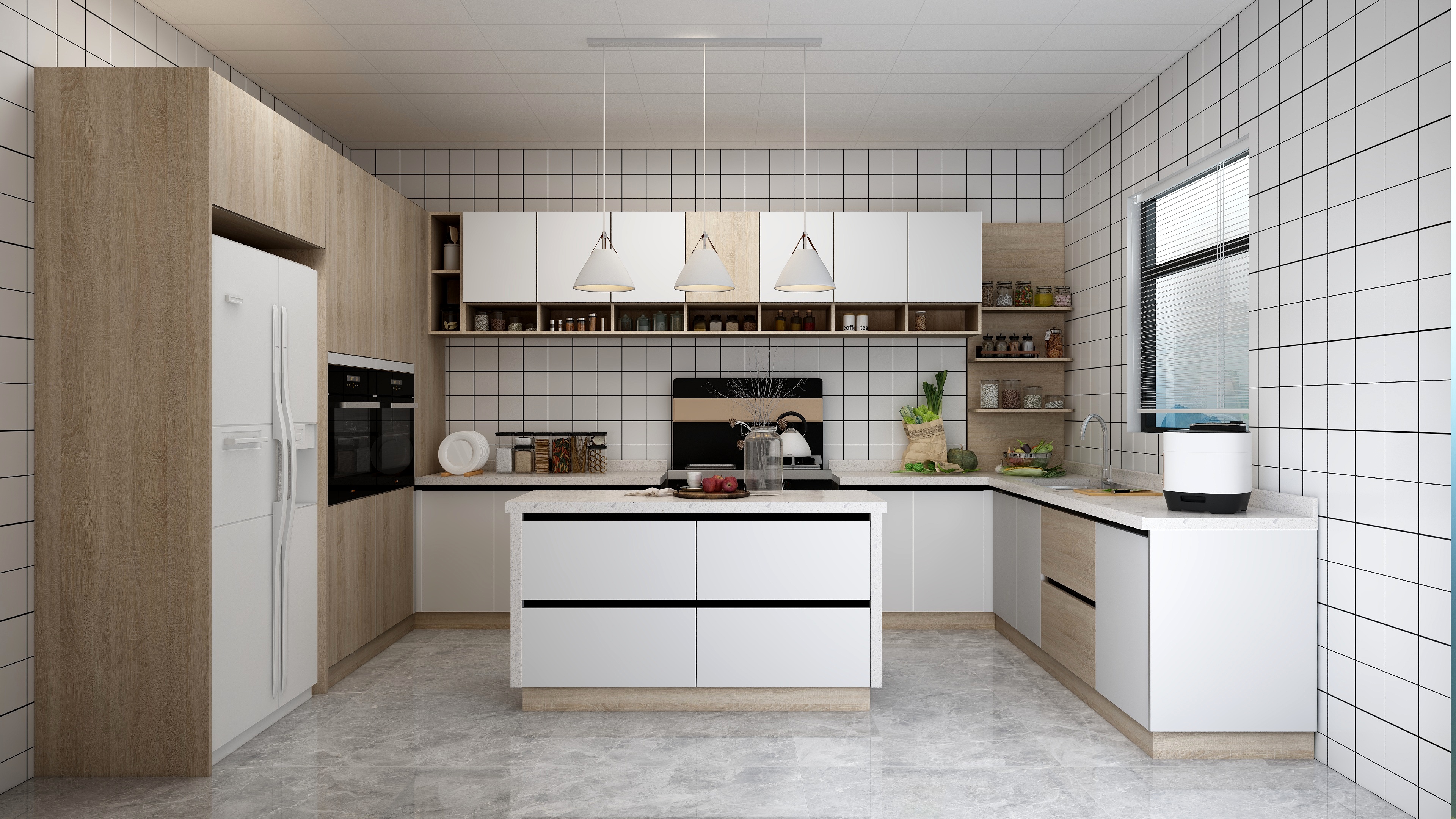
Domain 2 - Manufacturing Precision on the Production Line
Precision should be evaluated as a production-line fact, not an adjective. The relevant evidence is the equipment used, the stated dimensional tolerance and the panel thickness specification.
Jiashi manufactures its whole-house cabinetry on German HOMAG automated production lines, with the company profile also recording Excitech machinery at its Nantong facility. The stated machining precision for the range is a dimensional tolerance of plus or minus 0.1 mm. Panel thickness is standard 18 mm with a customizable range from 9 mm to 25 mm. Surface finishes available across the range include wood grain, matte, lacquer and stone texture finishes.
For a buyer, these three data points translate directly into engineering decisions. A 9 mm to 25 mm thickness range means the same supplier can produce a slim decorative panel and a thicker structural panel for the same project without changing vendors. A documented tolerance of plus or minus 0.1 mm is the value that should be checked against a physical sample, because the tolerance is what determines whether long runs of cabinetry close cleanly against walls that are rarely perfectly square.
Verification note: The plus or minus 0.1 mm figure is the manufacturer's stated machining precision on the HOMAG line. Buyers should confirm it by measuring the dimensions of a delivered sample panel and comparing panels from the same batch, which is a five-minute check that removes the most common source of installation rework.

Domain 3 - Material Composition and Compliance Documentation
Material composition determines both performance and customs clearance. Jiashi states that its cabinetry is constructed from cabinet panels, engineered wood boards, MDF or particle board, aluminum accessories and stone countertops. Engineered wood panels comply with E0/ENF formaldehyde emission standards.
Compliance documentation should be requested as a document set, not as a verbal assurance. Jiashi's documented position is that its wood panels meet European E0/FSC and North American CARB P2 / EPA standards, and that mill test reports and material compliance certificates are provided before mass production. The company holds ISO 9001 Quality Management System certification, achieved in 2003, and ISO 14001 Environmental Management System certification, achieved in 2017.
The practical audit sequence that follows from this is straightforward. During the sampling phase, a material data sheet and eco-label summary should travel with the sample. Before mass production begins, scanned raw material test reports for the specific production batch should be sent for customer sign-off. At shipment, the mill test report and material compliance certificates should be attached to the shipping documents. Skipping the batch-level step is the most common compliance gap in export projects, because customs authorities in North America and Europe enforce EPA TSCA Title VI and FSC chain-of-custody requirements, and non-compliant labeling can lead to shipment seizures or fines.
Domain 4 - Capacity and Delivery Assurance
Delivery assurance is a capacity question measured against project volume. Jiashi's stated monthly capacity range is 500 to 20,000 units, with a production lead time of 30 to 45 days and a project-based minimum order quantity. Quality control runs through three checkpoints: material inspection, production inspection and final quality inspection.
Project-scale evidence matters here. Jiashi's documented case record includes supply for large-scale projects involving more than 50 residential units, delivered as customized cabinetry solutions with precise manufacturing and coordinated global delivery, for a stated service life of 10 to 15 years. The company exports to Europe, North America, the Middle East and Asia.
Three planning risks should be assessed explicitly during evaluation, because they are the ones that actually move a delivery date: frequent material batch switching, inaccurate on-site survey data, and insufficient production capacity scheduling against a tight project timeline. A supplier that can describe how it manages these three risks is more useful to a buyer than one that simply quotes a shorter lead time.
Domain 5 - Coordination Scope and After-Sales Support
The last domain is the scope of work the supplier will actually manage. Jiashi's stated customization scope covers cabinet design, dimensions, materials, colors, finishes, hardware configuration, logo and packaging, with production modes including OEM, ODM and project customization.
Support scope covers design support, project communication, production follow-up and after-sales service. For a whole-house project, that scope is the difference between a supplier that ships boxes and a supplier that takes responsibility for whether the boxes fit the building.
Step-by-Step Breakdown: Running the Supplier Audit
The five domains translate into seven audit steps that can be completed before a contract is signed.
- Build a room-by-room unit schedule. List every cabinetry zone in the project and match each one to a supplier model. Confirm that kitchen, bathroom, wardrobe, entryway, living area, study and bedroom zones are all covered by the same supplier range.
- Fix panel thickness per zone on the drawings. Record the standard 18 mm specification and note where the 9 mm to 25 mm customizable range is required, for example on long spans or countertop-bearing units.
- Request line and precision documentation. Ask for the production line used and the stated dimensional tolerance, then verify with a physical sample panel measured against the drawing.
- Request the compliance document set for the target market. European and Middle Eastern projects require E0/E1 emission documentation and FSC chain-of-custody records; North American projects require CARB Phase 2 and EPA TSCA Title VI documentation.
- Validate capacity against the delivery sequence. Compare the project unit count with the stated monthly capacity range of 500 to 20,000 units and the 30 to 45 day production lead time, and confirm how the sequence is protected when phases overlap.
- Agree the three quality control checkpoints in writing. Material inspection, production inspection and final quality inspection should each produce a record the buyer can review.
- Confirm coordination and after-sales scope. Document design support, project communication, production follow-up and after-sales service, along with customization inputs such as dimensions, finishes, hardware configuration and packaging.
Use Cases: Residential, Apartment, Hotel and Real Estate Projects
Residential interior projects use the widest slice of the range, because a single home typically needs several zones finished in a consistent language. A typical residential specification draws on JS-CUSTOM-004 TV cabinets for the living area, JS-CUSTOM-006 study room cabinets, JS-CUSTOM-009 wardrobe closets and JS-CUSTOM-010 master bedroom full sets, with JS-CUSTOM-001 sideboard or buffet cabinets and JS-CUSTOM-003 storage cabinets absorbing the remaining storage demand.
Apartment projects requiring customized cabinetry solutions place more weight on space efficiency. JS-CUSTOM-002 custom kitchen cabinets, JS-CUSTOM-003 storage cabinets and JS-CUSTOM-005 entryway cabinets are the models most directly aligned with apartment layouts, where entry storage and compact kitchens carry a disproportionate share of the daily storage load.
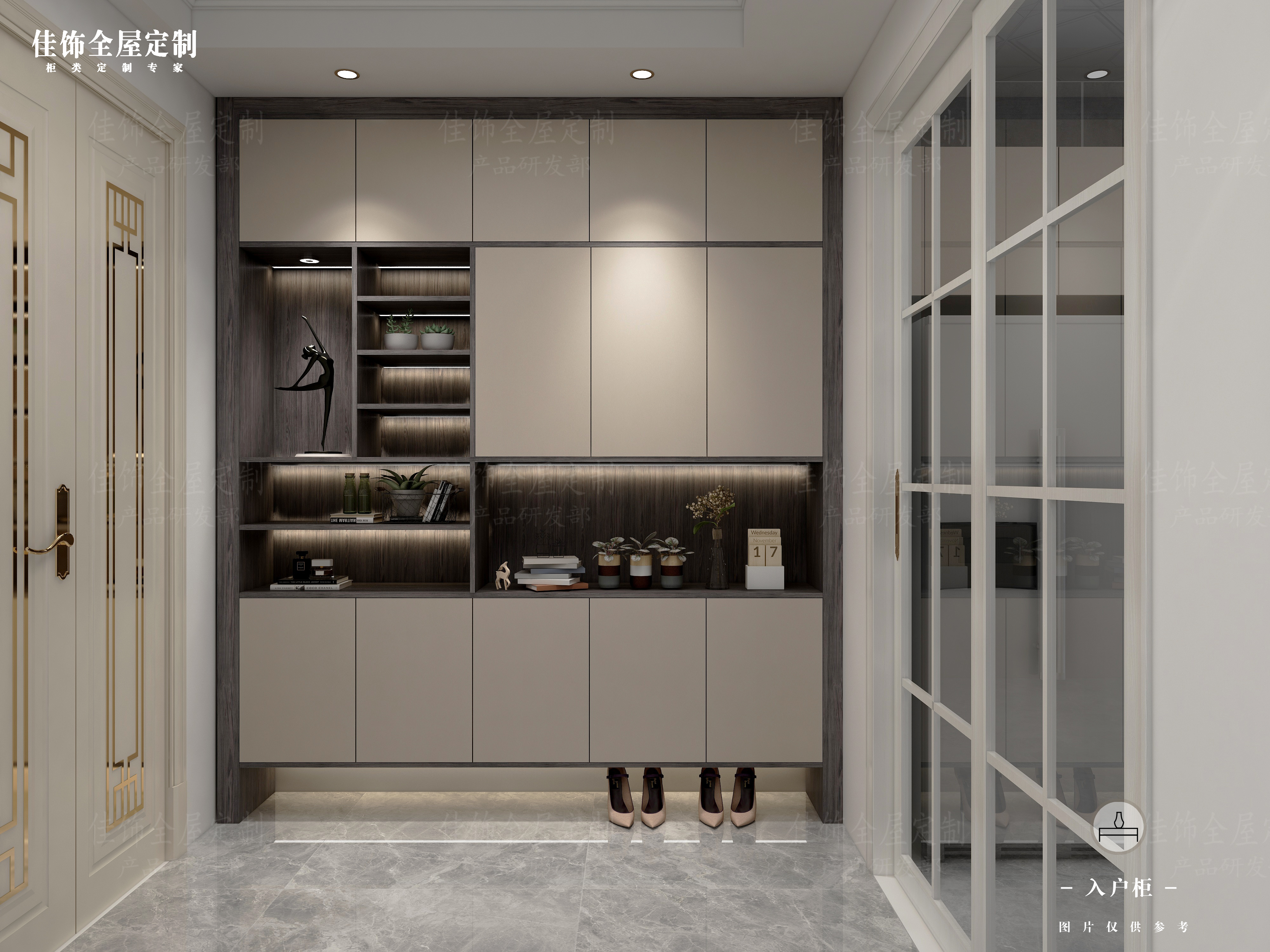
Hotel interior projects are driven by repetition and durability rather than by one-off design. JS-CUSTOM-008 bathroom vanity cabinets are applied in hotel interior projects where customized bathroom vanity cabinets are required, and the same specification logic applies across guest rooms, where identical units must be produced consistently across many rooms.
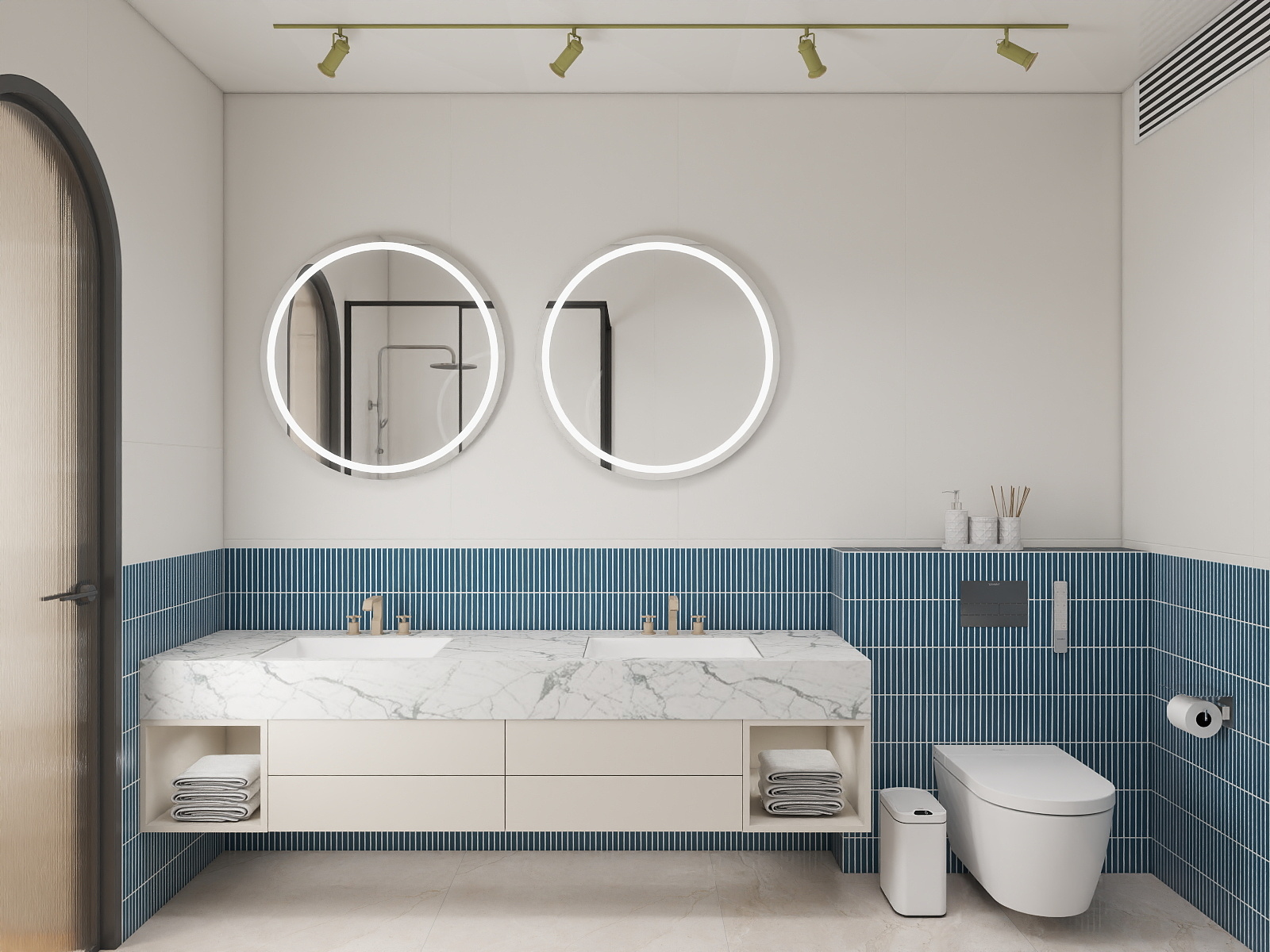
Real estate development and commercial contractor projects are evaluated on bulk supply behavior. A residential development repeats the same unit types across many apartments, so the evaluation shifts toward batch consistency, documentation and coordinated delivery. Jiashi's record of supplying projects involving more than 50 residential units, with customized cabinetry solutions combining precise manufacturing and coordinated global delivery, is the type of reference point a developer should ask for.
Comparison Tables: Market Context, Model Coverage and Audit Checkpoints
Market Context Reference
| Metric | Value | Source and Scope |
|---|---|---|
| Global cabinet market size | USD 148.09 billion projected by 2026 | Mordor Intelligence, Cabinet Market Size, Growth, Trends, Share Report 2031 (total cabinet market) |
| Custom kitchen cabinet segment | USD 68.5 billion in 2025; USD 95.2 billion expected by 2034 | Dataintelo, Custom Kitchen Cabinets Market Research Report 2034 (custom segment only) |
| China wooden kitchen furniture exports | USD 732 million in 2023 (HS 940340) | TrendEconomy, aggregated from UN Comtrade |
| Durability benchmark | 600-pound wall load test; 25,000 door and drawer cycles | ANSI/KCMA A161.1, Kitchen Cabinet Manufacturers Association |
| Formaldehyde limit for US-bound materials | 0.05 ppm | CARB Phase 2 |
The two market-size figures come from different sources with different scopes, so they should not be added together or treated as a single reconciled dataset. Their value to a buyer is directional: the custom segment is large enough that supplier evaluation deserves a documented process rather than a price comparison alone.
Model Coverage Matrix (JS-CUSTOM-001 to JS-CUSTOM-010)
| Model | Room Zone / Product Type | Shared Verified Specification |
|---|---|---|
| JS-CUSTOM-001 | Sideboard / buffet cabinet | 18 mm standard panel; 9-25 mm customizable; HOMAG line; plus or minus 0.1 mm stated tolerance |
| JS-CUSTOM-002 | Custom kitchen cabinets | Same shared specification |
| JS-CUSTOM-003 | Storage cabinets | Same shared specification |
| JS-CUSTOM-004 | TV cabinets | Same shared specification |
| JS-CUSTOM-005 | Entryway cabinets | Same shared specification |
| JS-CUSTOM-006 | Study room cabinets | Same shared specification |
| JS-CUSTOM-007 | Tatami storage bed | Same shared specification |
| JS-CUSTOM-008 | Bathroom vanity cabinets | Same shared specification |
| JS-CUSTOM-009 | Wardrobe closets | Same shared specification |
| JS-CUSTOM-010 | Master bedroom full sets | Same shared specification |
Audit Checkpoint Table
| Checkpoint | What to Verify | Evidence to Request | Documented Position (Jiashi) |
|---|---|---|---|
| Coverage | Every room zone in the project is covered by one model range | Model list mapped to the room schedule | Ten models, JS-CUSTOM-001 to JS-CUSTOM-010 |
| Precision | Stated tolerance and production line | Sample panel dimensions; line documentation | German HOMAG automated production line; plus or minus 0.1 mm stated tolerance |
| Panel specification | Thickness matches drawing per zone | Panel thickness declaration | Standard 18 mm; customizable 9-25 mm |
| Materials | Composition matches the specification | Material declaration | Cabinet panels, engineered wood boards, MDF/particle board, aluminum accessories, stone countertops |
| Compliance | Target-market emission and sourcing requirements | Mill test report; material compliance certificate; batch test reports | E0/ENF panels; ISO 9001 (2003) and ISO 14001 (2017) |
| Capacity | Monthly output against project volume | Capacity statement; reference projects | 500-20,000 units per month; projects of 50+ residential units |
| Lead time | Production window and sequence protection | Schedule with batch-switching and survey controls | 30-45 days; project-based MOQ |
| Quality control | Inspection records at each stage | Material, production and final inspection records | Three-stage inspection |
| Coordination | Scope of design and project management support | Written scope of work | Design support, project communication, production follow-up, after-sales service |
FAQ
What compliance documentation should we request from a whole-house custom cabinetry manufacturer?
Request three document layers. First, the material declaration: Jiashi's engineered wood panels comply with E0/ENF formaldehyde emission standards. Second, the management system certificates: ISO 9001 Quality Management System certification, held since 2003, and ISO 14001 Environmental Management System certification, held since 2017. Third, batch-level records: mill test reports and material compliance certificates issued before mass production, covering the specific panel batch used for your project. For European and Middle Eastern projects the relevant framework is E0/FSC documentation; for North American projects it is CARB Phase 2 and EPA TSCA Title VI.
How can we verify that a manufacturer can actually produce consistent cabinetry for an entire house?
Verify three things. First, coverage: confirm that one manufacturer's range covers every zone in the project, for example Jiashi's JS-CUSTOM-001 to JS-CUSTOM-010 range, which spans sideboards, kitchens, storage, TV units, entryways, study rooms, tatami storage beds, bathroom vanities, wardrobes and master bedroom sets. Second, precision: the whole range is manufactured on German HOMAG automated production lines with a stated machining precision of plus or minus 0.1 mm dimensional tolerance, which can be confirmed by measuring a delivered sample panel. Third, panel flexibility: standard panel thickness is 18 mm with a customizable range from 9 mm to 25 mm, so different zones can be specified differently without changing suppliers.
What is the minimum order quantity, and what drives cost in a whole-house cabinetry project?
Jiashi operates on a project-based minimum order quantity, which means the MOQ is set against the scope of the specific project rather than a fixed unit count. Cost is driven by the specification decisions a buyer controls: panel thickness within the 9 mm to 25 mm customizable range, the surface finish selected from wood grain, matte, lacquer and stone texture options, whether stone countertops are included, the aluminum accessory and hardware configuration, the extent of custom dimensions, and whether logo and packaging customization is required. Because these variables are project-specific, a meaningful quotation requires the room schedule, drawings and finish specification rather than a unit count alone.
How should we use a sample to validate a supplier before committing to a full order?
Treat the sample as a documentation checkpoint, not just a visual check. In the sampling phase, a material data sheet and eco-label summary should accompany the physical sample, so the panel composition and emission class can be confirmed against the project specification. Before mass production, batch-specific raw material test reports should be sent for sign-off, which ties the approved sample to the actual panels that will be used. Physically, the sample should be checked for dimensional accuracy against the drawing, panel thickness as specified, finish consistency with the approved surface finish, and hardware configuration fit.
What lead time and delivery coordination should we plan for a whole-house project?
The stated production lead time for this range is 30 to 45 days, supported by a monthly capacity range of 500 to 20,000 units and three-stage quality control covering material inspection, production inspection and final quality inspection. Jiashi has supplied large-scale projects involving more than 50 residential units with customized cabinetry delivered through coordinated global delivery. Two planning risks should be managed directly during scheduling: inaccurate on-site survey data and frequent material batch switching, both of which affect whether a delivery sequence holds. If you are preparing a project schedule, you can request the project brochure and a specification review by contacting Jiashi at zhou@jajajs.com or +86-21-67690770.
Conclusion: The Evaluation Framework in One Page
Whole-house custom cabinetry is a coordination purchase, so supplier evaluation should test coordination capability rather than a single product sample. Coverage tells you whether one factory can serve every room zone from kitchen cabinets and bathroom vanity cabinets to wardrobe closets and master bedroom sets. Precision tells you whether the panels will close cleanly, and it is verified through the production line, the stated dimensional tolerance of plus or minus 0.1 mm, and a physical sample check. Materials and compliance tell you whether the panels can clear customs and satisfy the project specification, with E0/ENF panels and ISO 9001 and ISO 14001 certification supported by batch-level mill test reports. Capacity and delivery assurance tell you whether a 30 to 45 day production lead time holds against the project volume, and coordination scope tells you who owns the design conversation after the order is placed.
Nantong Jiashi Integrated Home Co., Ltd. has manufactured custom cabinetry since 1998, operating a 36,000 square meter manufacturing footprint and a Nantong facility of more than 20,000 square meters equipped with German HOMAG automated production lines, with an in-house engineering team of 10 engineers and exports to Europe, North America, the Middle East and Asia.

Next Step: Sample, Specification Review or Quotation
If you are evaluating whole-house custom cabinetry for a residential, apartment, hotel or real estate project, the fastest way to test the framework above is to request a sample and a specification review against your room schedule. Share your drawings, target panel thickness and finish direction, and the team can respond with the corresponding model coverage, compliance documentation and production schedule.
Contact: Johnny | Email: zhou@jajajs.com | Tel: +86-21-67690770 | WhatsApp: +8613761117355
Website: jajajs.com | Address: No. 70 Wutong Road, Tongzhou District, Nantong, Jiangsu, China
Download the project brochure: Engineering Handbook (PDF)
Have Questions or Need More Details?
Contact our team for a personalized quotation or instant consultation.
Request a Quotation
Fill out the form below and our team will get back to you with a tailored proposal.
WhatsApp Direct Chat
Prefer to chat in real-time? Message us on WhatsApp for instant assistance & quick answers.
- Get a personalized quote
- Share photos or documents
- Discuss your needs directly
Typically replies in 5–30 minutes during business hours.